

Listen to this section with narration
We Always Ended Up There: Julie and Dennis Huckabone
“My name is Julie Huckabone. I was born and raised in Douglas.” It’s a simple statement, offered plainly, but it carries the weight of belonging. Douglas isn’t introduced as a place on a map—it’s introduced as home. For Julie, there is no separation between growing up and growing up here. The two ideas are inseparable. Family, geography, and memory are all braided together from the beginning.
Terry and Evelyn are not distant figures in her story. “Terry and Evelyn are my aunt and uncle,” she says, placing the Douglas Tavern immediately inside the family circle. It isn’t something discovered later or stumbled into by chance. It’s there early, close, and familiar. “The Douglas Tavern’s been a really important part of our lives.” The sentence doesn’t rush. It doesn’t explain itself. It doesn’t need to.
What comes through in these early memories isn’t nostalgia yet. It’s foundation. Douglas is described through relationships—who you’re related to, who you went to school with, who you met along the way. The Tavern sits quietly inside that framework, already established as something steady and known.
There’s no need here to explain why the Douglas Tavern mattered. At this point in the story, it simply is. It exists the way family homes exist, or familiar roads, or names everyone recognizes. Before the crowds, before the celebrations, before the long nights and late mornings, it’s already part of daily life.
These beginnings matter because they show how deeply rooted the Tavern was long before anyone thought to describe it as special. It wasn’t something people traveled to yet. It was something they grew up with.
Drifting Into Douglas
“Hi, I’m Dennis Huckabone.” The way he begins is straightforward, the kind of introduction that doesn’t linger. What follows fills in the path that led him to Douglas—not directly, not all at once, but gradually. “Born and raised in Cobden,” he says first, anchoring himself just outside the village that would later matter so much. His early life moves through familiar rural rhythms. He “went to school, met all my buddies in Opeongo,” a detail that places him in a wider orbit of small communities, connected by classrooms, friendships, and shared time.
Douglas enters his story not with drama, but with motion. He “drifted into Douglas.” It’s a phrase that suggests ease rather than intention. There’s no single moment described where everything changed. Instead, Douglas becomes part of life the way certain places do—by proximity, by habit, by people already there. And once it does, the Douglas Tavern quickly becomes central to that drift, settling into something solid.
“That was our night stay with the Douglas Tavern,” Dennis says. The words feel practical, lived-in. The Tavern isn’t framed as a novelty or a special occasion yet. It’s a place where nights are spent, where people end up together. “Also my wife there,” he adds, folding something deeply personal into the same sentence. There’s no separation between social life and personal milestones. They exist in the same space.
“Yeah, it’s a big part of our lives.” Again, the importance is stated plainly. There’s no need to embellish it. By the time Dennis is talking about Douglas, the Tavern is already woven into routine. It’s not something on the edge of life—it’s in the middle of it.
What stands out in these early memories is how normal it all feels to the people telling it. The Douglas Tavern isn’t described yet as crowded, legendary, or overwhelming. It’s described as familiar. It’s where nights land. It’s where relationships form and continue. It’s where people who grew up nearby eventually find themselves returning.
This sense of drifting matters. It explains why the Tavern later feels so deeply missed. For people like Dennis, Douglas wasn’t a destination chosen once. It was a place that kept pulling them back. And the Tavern sat there, night after night, quietly doing its work—holding people together without ever announcing that it was doing so.
First Nights Through the Door
“Yeah, mine was probably back… what would have been legal age or close to legal age to getting in.” Dennis’s first memory of the Douglas Tavern arrives without a fixed date, but it doesn’t need one. The timing is measured instead by life stage—young enough to feel the excitement, old enough to remember it clearly. The nights start simply, built around routine and friendship. “Probably pool nights, Wednesday night with all my buddies from the Douglas area.”
He lists the names the way people do when those names still matter. “Michael John Rice, Michael Ott, Tony, all the guys.” The Tavern isn’t just a place they went—it’s where they gathered. Wednesday nights weren’t an exception. They were a starting point. “That would be our first night to start the weekend,” Dennis says. Free pool on Wednesdays, then “Thursday, Friday, Saturday just because we were in the area.” The days blur together into a stretch of time defined by showing up.
It happens early. “So it was early on in college, pre-college times.” The Douglas Tavern enters life at that moment when independence is new and friendships feel permanent. The place becomes part of how the week is shaped, how time is marked. Wednesday means pool. The weekend begins before the weekend technically starts.
Julie’s earliest memory comes from a different angle. “One specific time I remember going, one of my earliest memories at St. Patrick’s Day.” She isn’t there as a customer yet. She’s behind the scenes. “I did get asked to help at the time they were making the t-shirts themselves.” There’s a press in the back. “A big hot press where you would hold the thing down and put whatever people wanted on the backs of the t-shirts.”
She remembers her age. “I was about 17.” Old enough to be trusted with the work, not old enough to be part of the crowd. That position gives her a different view. “So I got to watch up close what was happening all during St. Patrick’s Day.” She sees it before she’s officially part of it. “And it was a really fun experience for me.”
That early glimpse matters. “And it just made me more excited for when it would be my turn to go.” Long before the Douglas Tavern becomes something overwhelming or legendary, it’s already pulling people in—one pool night, one press of a t-shirt, one Wednesday at a time.
Before You Were Old Enough to Be There
“One specific time I remember going, one of my earliest memories at St. Patrick’s Day.” Julie’s memory doesn’t begin at the bar or in the crowd. It begins behind the scenes, in the back of the Douglas Tavern, at a time when participation looked different. She wasn’t there as a customer yet. She was there to help.
“I did get asked to help at the time they were making the t-shirts themselves.” The work was practical and hands-on. There was no outside supplier, no polished process. “So they had a press in the back, a big hot press where you would hold the thing down.” The task was simple and repetitive, but it placed her close to the heart of what was happening. “And put whatever people wanted on the backs of the t-shirts.”
She remembers how old she was. “I was about 17.” That detail matters. It places her in between—old enough to be trusted, young enough to still be waiting. She’s not part of the celebration yet, but she’s close enough to feel it. “And so I got to watch up close what was happening all during St. Patrick’s Day.”
From that position, the Tavern reveals itself fully. She sees the movement, the energy, the pace of the day as it unfolds. She’s inside the building, but slightly outside the moment. That distance sharpens the experience instead of dulling it. “And it was a really fun experience for me.” The fun comes not from participation, but from witnessing something alive.
The memory doesn’t end there. It points forward. “And it just made me more excited for when it would be my turn to go.” That sentence carries anticipation, patience, and certainty all at once. There’s no doubt that her turn will come. The Douglas Tavern is already part of her life. It’s only a matter of time before she steps into it fully.
This early experience captures something essential about the place. Even from the sidelines, even before being officially welcomed into the crowd, the Tavern pulls people in. It teaches them what it means long before they’re allowed to take part. And for Julie, standing at that hot press at seventeen, the Douglas Tavern was already shaping memory—quietly, completely, and without needing to explain itself.
Working the Tavern
“I was lucky enough to work the door for many years for Billy and the group.” Dennis’s time at the Douglas Tavern moves naturally from being in the crowd to being part of how the place ran. Working the door wasn’t a role that put him above the room. It put him right at the threshold, where everyone passed through. “Cleared tables for a couple of years as well,” he adds, describing the kind of work that happens quietly, constantly, and without ceremony.
There’s humour woven into the memory. “Until Kevin Crozier stole my job.” The line lands lightly, the way stories do when they’ve been told before and always get a laugh. It’s not said with bitterness. It’s said with familiarity. The work mattered, but so did the people doing it.
“But it was lots of fun,” Dennis says. The enjoyment doesn’t come from the task itself. It comes from what the task allows him to see. “It was great to see all the people coming in and out.” From the door, he watches the room change throughout the night. Faces arrive. Groups merge. Energy builds. Working becomes a front-row seat to the life of the Tavern.
Julie’s experience with working there is different, and she’s clear about that. “So I wasn’t a behind the scenes person.” She places herself firmly on the other side of the bar. “But I definitely spent a lot of time in front of the bar.” Her role isn’t about responsibility. It’s about presence. “Enjoying myself as a customer and being part of all the festivities.”
There is one exception. “One time I got to work behind the bar and it was a really special moment for me.” She doesn’t elaborate on the details of the shift. She doesn’t need to. The importance is in the access. Being behind the bar—even once—meant stepping into a role she had watched others fill for years. It meant crossing a line that only certain people ever cross.
Whether standing at the door, clearing tables, or leaning on the bar, everyone was contributing to the same thing. The work wasn’t separate from the fun. It was part of it.
After Work at the Douglas Tavern
“Absolutely.” Julie doesn’t hesitate when the connection is made between workdays and evenings at the Tavern. For her, the Douglas Tavern wasn’t separate from daily life—it was what came after it. “I worked at Bromley Farm Supply for five years,” she says, grounding the memory in routine and time. Five years of days measured by work, and evenings anticipated by what came next.
“And waited patiently and impatiently for the time when I could go over after work.” The phrase captures both restraint and excitement. The Tavern wasn’t something she drifted into casually. It was something she thought about while the day was still unfolding. There was a sense of knowing where the day would end, even while it was still going on.
“And join in the after work celebrations at the hotel.” The word celebrations matters here. These weren’t formal events or planned parties. They were gatherings that grew naturally out of shared workdays and shared geography. People didn’t need an invitation. They just needed to be done for the day.
“And when that day finally came it was so fun to be a part of the group.” There’s a clear sense of arrival in that sentence. Waiting turns into belonging. Watching turns into participating. The Douglas Tavern becomes not just a place to go, but a place to be included. “And the laughs and the Friday night celebrations.” The laughter isn’t described in detail, but it doesn’t need to be. It’s familiar, expected, recurring.
Dennis’s experience echoes the same rhythm from a slightly different angle. “That was our night stay with the Douglas Tavern.” Nights settle there. They end there. The Tavern becomes the punctuation mark at the end of the workday sentence.
What these memories show is how seamlessly the Douglas Tavern fit into working life. It wasn’t an escape from the day so much as a continuation of it—just louder, looser, and shared. The people you worked with, grew up with, or lived near didn’t disappear when the workday ended. They reappeared across the bar.
There’s no sense of obligation in these after-work nights. No one talks about needing to go. They talk about waiting to go. That distinction matters. The Douglas Tavern wasn’t where people felt they should be. It was where they wanted to be once the day was done.
By the time Friday night arrived, the transition was automatic. Work flowed into gathering. Gathering flowed into celebration. And the Douglas Tavern held it all, night after night, without needing to announce itself as anything more than what it already was.
Knowing Everyone in the Room
“I think for us when we first started going we were all so young.” Dennis frames the early days of the Douglas Tavern through age and familiarity. Youth isn’t just about how old they were—it’s about how small the world felt. “And yet we knew the older generation because we grew up with them, right?” The room wasn’t divided. It wasn’t segmented by age or stage of life. Everyone was already connected long before they walked through the door.
“Well, now we’re becoming the older generation.” The shift is subtle but unavoidable. Time moves forward, and roles change with it. What stays constant is the memory of what it once felt like to walk into a place where every face meant something. “Years ago, you would know everybody in the place,” Dennis says. The certainty of that statement doesn’t leave room for exaggeration. Knowing everyone wasn’t an ideal—it was reality.
“And then it slowly changed to where maybe we didn’t know quite as many.” The change isn’t described as loss, just evolution. The Douglas Tavern grows beyond its earliest circle. “In the last few years, I think most of them were taken for granted, locally.” Even as new faces arrive, the core remains rooted nearby. Douglas still shows up for itself.
“But there were definitely more imports as well.” The word lands with affection, not resistance. Outsiders don’t threaten what the Tavern is—they’re drawn to it. “Because it was such a big spot and it was so well known.” Reputation spreads outward. The Douglas Tavern becomes something people hear about before they experience it. “People were coming from far and wide. Especially for the St. Patrick’s Day festivities.”
Julie notices another shift layered on top of that growth. “And I think I would say something changed when drinking and driving changed.” The reality outside the Tavern reshapes who comes and how often. “And it was more of a trip for people to come to Douglas. From Renfrew or Eganville or whatever.” Attendance becomes more intentional. People plan instead of drifting.
“But when they did come, it was for an event or a celebration.” The gatherings take on weight. They mean something because effort is involved. “And the locals became more important that way.” Familiar faces matter even more when the room fills with unfamiliar ones. “Because we were the ones who would be there more frequently.”
Knowing everyone in the room was never just about recognition. It was about belonging. Even as the Douglas Tavern changed, that sense of connection—between locals, generations, and visitors—remained at its core.
St. Patrick’s Day Takes Over Douglas
“Especially for the St. Patrick’s Day festivities,” Dennis says it simply, but the sentence opens the door to something much larger. St. Patrick’s Day isn’t described as just another busy day at the Douglas Tavern. It’s the moment when everything expands—when a place that already feels full somehow holds much more.
“For us when we first started going,” Dennis explains, “most of them were local.” In those earlier years, the faces were familiar, the connections already established. But St. Patrick’s Day shifts that balance. “There was definitely more imports as well.” People arrive from elsewhere, drawn in by reputation and word of mouth. “Because it was such a big spot and it was so well known.”
Julie feels that shift clearly. When she leaves for university, she realizes how hard it is to explain what St. Patrick’s Day in Douglas actually is. “When I went to university, I didn’t go very far. I went to Ottawa,” she says, placing herself just far enough away to see Douglas differently. “Probably around October, I started saying to my friends, you’ve got to come to St. Patrick’s Day. You’re going to want to come and see this.”
The reaction is predictable. “They were like, we’ve been to your little town. It’s so tiny. What are you talking about?” Douglas, on its own, doesn’t suggest scale. That’s part of the surprise. “Trying to put into words for them what this experience would be like,” Julie says, knowing language alone isn’t enough.
“So, of course, I would go home a few days before and be here already.” Preparation matters. Timing matters. “And so a couple of different times these friends would arrive. They’d borrow a car and drive up from Ottawa and they would get here.” What happens next stays with them. “Their minds would just kind of be blown that this little tiny place could hold this many people and this much fun.”
“And then another week later it would just be over.” The transformation is temporary. That’s part of the magic. “So they would come up even after I was done at university.” The pull doesn’t fade. “They still check in with me around St. Patrick’s Day because they know how important it is to me.”
For one day, Douglas stretches beyond its borders. Then it settles back again. And somehow, that makes it even more unforgettable.
Floats, Parades, and Family Chaos
“Dennis is the float builder extraordinaire” Julie says it like a fact that’s long been established, not something that needs defending. When St. Patrick’s Day in Douglas expands beyond the walls of the Tavern, it spills into the streets, and the parade becomes part of the rhythm. Their family isn’t on the sidelines. They’re in it.
“We always helped with the Bromley Farm Supply float.” Helping isn’t framed as a task—it’s participation. It’s what you do when something belongs to you. “Our dad was the marshal of the parade one year.” The role is mentioned without flourish, but it places family directly at the center of the day. Not watching. Leading.
“And then a couple of years we just had our own family float.” The shift feels natural. When something becomes tradition, people begin shaping it themselves. Julie doesn’t smooth over the effort involved. “Sometimes it would be kind of a frantic time getting everything ready for the float.” The chaos is part of the memory. Deadlines press in. Details matter. Time runs short.
“But it was another special part of it.” The frantic moments don’t diminish the experience. They deepen it. Preparing becomes its own form of gathering, its own shared work that adds meaning to the day. “It just sort of added to the whole experience for everybody.”
The parade’s reach stretches further than Douglas itself. Julie notices it through her work. “And then in my job I worked in a lot of different schools.” The connection surprises her. “And I would run into kids from my schools in our choir or in Pembroke who were coming to Douglas for this parade that was tied to St. Patrick’s Day.” The idea that students from elsewhere know Douglas for this one day speaks to how far the celebration travels.
“It was a really neat thing to have happen.” The parade doesn’t just mark a holiday. It carries the Tavern’s energy outward. It turns a local celebration into something people plan for, talk about, and remember.
In Douglas, St. Patrick’s Day isn’t contained. It moves. It builds. It rattles along the road in the form of floats held together by family effort and last-minute fixes. And every year, somehow, it comes together again.
Life Events Marked at the Tavern
“The night we got engaged we didn’t have an elaborate,” Julie says, stopping herself slightly as she finds the right words. What mattered wasn’t a grand plan. “We had a really nice at-home engagement but fortunately there was that big family party going on at the hotel and we kind of crashed the party.” There’s no apology in the memory. That’s where you went. “You know, that’s where we came after we got engaged.”
The Douglas Tavern wasn’t reserved for certain kinds of moments. It absorbed all of them. “You know, anything that happened,” Julie says, widening the frame. “If somebody had a baby we might go to hotels to have a beer.” Celebration didn’t require formality. It required presence. “If somebody died we would stop on the way after the funeral to have a beer.” Grief didn’t send people away. It brought them together.
“Baby showers, wedding showers, you name it.” The list comes quickly, because there’s no need to dwell on any one event. What matters is the pattern. Life happened, and then people went to the Tavern. Over and over again.
Julie describes the feeling of arrival in a way that doesn’t need explanation. “When we were talking on the way up,” she says, grounding the memory in motion. “Like I grew up in Douglas so when we would come down the hill, we were coming to an event at the Tavern.” The hill becomes a marker. A transition point. “Coming over the hill and we would see all the cars and sort of know like, okay, here we go again.”
The sight alone tells the story. “There’s going to be something fun happening here tonight.” No announcement needed. No invitation required. The cars say enough. “That’s always something for me,” she adds. The memory stays vivid. “Coming down the hill. The lights are on and we’re getting ready.”
What stands out is how naturally the Tavern holds every kind of gathering. Engagements don’t displace funerals. Celebrations don’t cancel out quiet moments. They all coexist. The Douglas Tavern doesn’t demand a certain mood. It meets people where they are.
By the time Julie talks about these moments, the Tavern isn’t just a place people go. It’s part of how they process life itself—by stopping in, by standing together, by having a beer, and by knowing they’re not alone.
The Building Was the Place, but the People Were the Thing
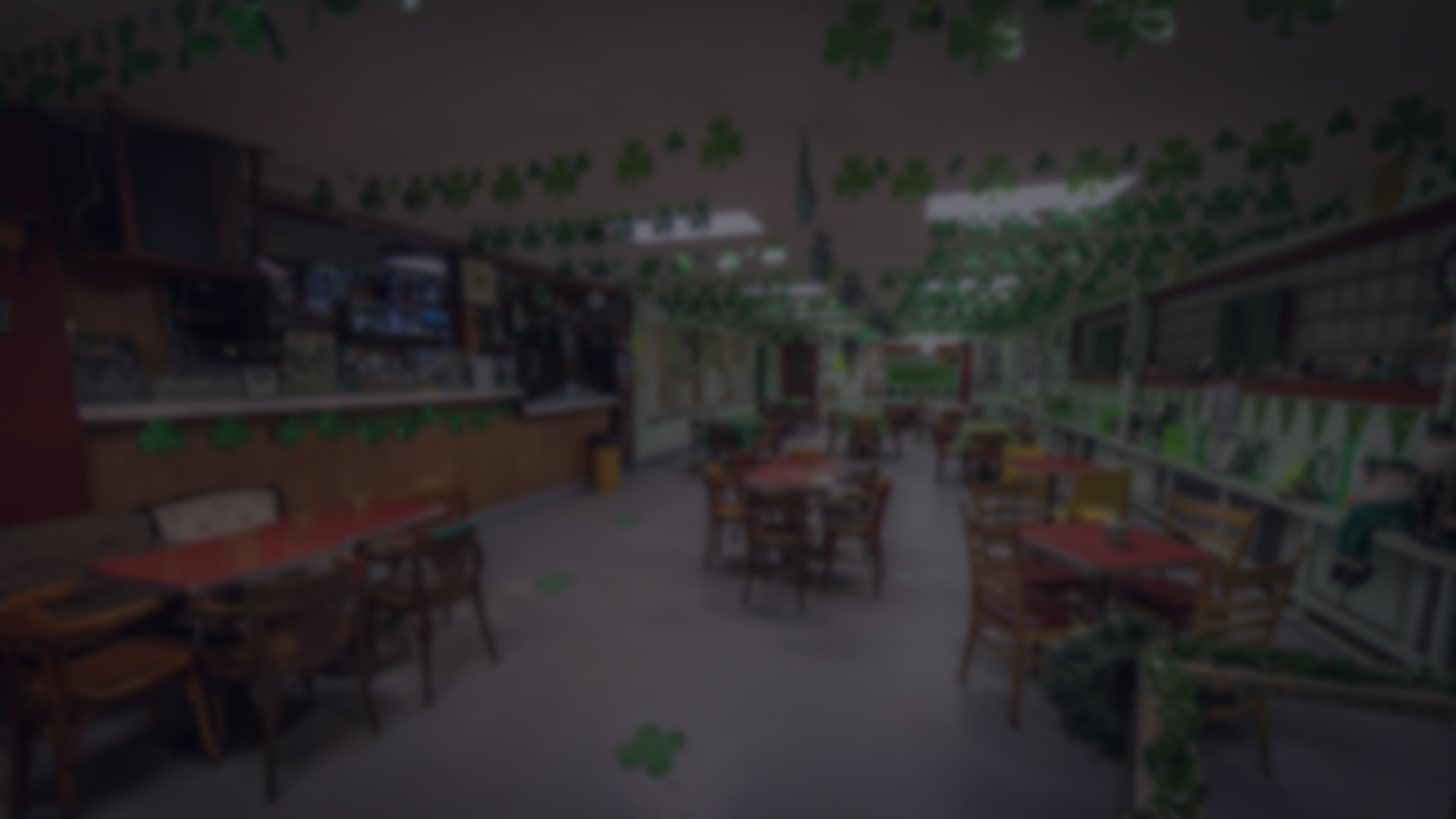
“Yeah, definitely.” Julie answers without hesitation when the idea is raised that the Douglas Tavern was more than just a building. The response doesn’t come from nostalgia. It comes from certainty. She describes what the place looked like in plain terms, stripped of romance. “You could go in there in sort of the light of day and see these green walls and orange curtains and not really know what’s the big deal, right?”
In daylight, the Douglas Tavern doesn’t announce itself. There’s nothing about the colours or the décor that explains what it becomes at night. “Like why are people so excited to be here?” Julie asks, voicing the question an outsider might reasonably have. On its own, the building doesn’t tell the story.
“But then you just had to be there,” she says. The answer isn’t visual. It’s experiential. “To know how important it was to the community and how important it was to our families and to our friends.” Importance doesn’t come from design or layout. It comes from accumulation—years of people showing up, standing close together, and sharing the same space over and over again.
Dennis echoes that idea in the way he talks about who filled the room. Over time, generations overlapped. “It was our generation and our mother and dad’s generation.” The Tavern didn’t rotate people in and out. It layered them. “That was the core group again,” he says, returning to a familiar phrase. Even when “the odd stranger came in,” there was no separation. “They were just mesmerized, but yet they were still part of it.”
Julie returns to the point that keeps surfacing, no matter which memory she’s describing. “The building was the place, but the people were the thing.” The sentence doesn’t ask for agreement. It states a fact learned through repetition. The walls held the space, but they didn’t create the atmosphere. That came from the people who walked through the door, recognized each other, and stayed.
The Douglas Tavern mattered because it allowed that kind of gathering to happen without friction. You didn’t need a reason. You didn’t need an invitation. You didn’t even need to understand what made it special until you were already inside it.
In the end, the colours of the walls fade. The curtains are just curtains. What remains is the memory of being there together—and knowing, without being told, that it mattered.
5:20 Fridays and Catch the Ace
“Well, and I think we have a slightly different version of the story too.” Julie is careful as she steps into this memory, marking it as something that evolved through conversation and repetition rather than a single fixed origin. What she recalls begins with people coming together. “It’s something about the Douglas Frosty Fun and there was some conversation there about coming together.”
The details matter because they explain why the Douglas Tavern became the center of it. “People would come at a certain time of day and they’d buy Catch the Ace tickets together.” This wasn’t about chance alone. It was about ritual. Friday night already had meaning in Douglas. This simply gave it a new shape.
“But they would meet at the Douglas Hotel at 5:20.” The time becomes precise. Exact. Memorable. “So then the Catch the Ace started being sold at the Douglas Tavern. So it was a natural place.” Nothing was forced. The Tavern was already where people gathered. This just gave them another reason.
“People would start coming, race afterward to get to 5:20 and buy your Catch the Ace tickets for the Renfrew Hospital.” The urgency adds energy. The Tavern fills with purpose. “And I would say for probably 18 months or so, that was where if you could get there at 5:20 on a Friday night, it was just like a family reunion every Friday night.”
That word—reunion—changes the tone. This isn’t a crowd. It’s reconnection. “And it was neat to have it happening towards the end,” Julie says. There’s an awareness that time is limited, even if no one knows exactly how.
People brought things with them. “People would bring snacks and food.” Celebration followed luck. “Three different times, people who bought tickets at Catch the Ace won the weekly prize and so we would be celebrating them as well.” Winning stayed local. Joy stayed shared.
Dennis sees the bigger picture. “It truly brought all the groups of friends.” Not just one generation. “It was our generation and our mother and dad’s generation.” Even newcomers fit in. “The odd stranger came in and they were just mesmerized, but yet they were still part of it.”
“It was a lot of fun.” Julie says it simply. The Tavern, near the end, found new life—right on time.
March 13, 2020
“And then just sort of springboarding off of that,” Julie says, shifting into a memory that remains sharply defined. There’s no confusion about the date. “A very vivid memory I have of not being able to go to the 5:20 was Friday, March 13, 2020.” The precision matters. This isn’t a blur. It’s a line drawn cleanly across time.
“I was working in Arnprior,” she says, grounding the moment in her normal routine. The day is moving forward like any other. But information begins to travel. “And family was saying, well, the Tavern’s closing or they’re closed because of the pandemic.” The news doesn’t arrive dramatically. It arrives through family, through conversation, the way important things often do in Douglas.
Julie finds herself carrying that information into another space. “And so I was going out to my staff at my school and saying, you know, we’re going to be closed after the March break.” She’s repeating what she knows, passing it along responsibly. Outwardly, the concern is professional. Schools. Schedules. Closures.
“But in my heart,” she says, marking a clear divide between what she’s saying and what she’s feeling, “I was like, am I going to get back to the Tavern?” The question isn’t rhetorical. It’s immediate and deeply personal. “Like, when do I get back to the Tavern?”
“That seemed at that time to be the most important thing to me.” The honesty of the statement lands without apology. In a moment when the world is narrowing quickly, the Douglas Tavern remains central—not as a building, but as a place of connection that suddenly feels uncertain.
This memory doesn’t describe a final night or a formal goodbye. It describes absence. The sudden inability to go somewhere that had always been there. The break in a ritual that had defined Fridays, gatherings, and time itself.
There’s no speculation here about what comes next. No reflection added after the fact. Just the feeling of standing in one place, talking about closures, while mentally reaching for another place that might already be slipping away.
March 13, 2020 doesn’t stand out because of what happened inside the Douglas Tavern. It stands out because, for the first time, people couldn’t get back to it—and no one knew when that would change.
After the Tavern
“Well, of course we’d love to be back in that place again because it certainly holds something really special to all of us.” Julie speaks carefully, without urgency, without assumption. The Douglas Tavern is no longer operating, but the attachment to it hasn’t loosened. Wanting to return isn’t framed as expectation. It’s framed as hope.
“But if that’s not possible,” she continues, shifting gently, “I know that for our group anyway, we’ve created so many memories and we’ve had so many experiences together that wherever we go, I think we’ll be bringing a bit of that with us.” The meaning of the Tavern doesn’t end with the building. It travels with the people who filled it.
“I know Maureen and Eddie have spent some time,” Julie says, grounding that idea in action. “They collected a lot of items during the auction sales and they’ve sort of created their own Douglas Tavern, a Little Diddly.” The words are specific and affectionate. This isn’t replacement. It’s continuation. “So that’s a place that we hope to spend some time and we’ve spent some time already too.”
Then comes the sentence that distills everything. “The building was the place, but the people were the thing.” It’s not said for emphasis. It’s said as fact.
Dennis’s vision of what comes next is rooted in the same idea of gathering. “We have a place back in the bush to do all of it.” The setting changes, but the purpose doesn’t. “It housed lots of people and we’ve had family days.” The pattern holds. People still come together. “And it might just extend into March 17th too for some of us or all of us, but as many as we can.”
The language never shifts toward loss alone. It stays with continuity. The Douglas Tavern may no longer host St. Patrick’s Day, but St. Patrick’s Day still exists for the people who built it year after year.
When it comes time to speak directly to Terry and Evelyn, the tone is steady and grateful. “Sure. I think just thanks for all the great memories,” Dennis says. “Obviously, we can’t count them all, but they were always a part of every one of them.” There’s no attempt to summarize decades. It isn’t possible.
“Again, see you at the farm and enjoy your retirement.” The goodbye isn’t final. It’s relational.
Julie adds, “Yeah, thanks for everything over the years and congratulations on finally getting to see the end of this exciting journey.” The journey doesn’t disappear. It settles. And what remains is the part that mattered most—people, still finding ways to gather, wherever they are.