
Listen to this section with narration
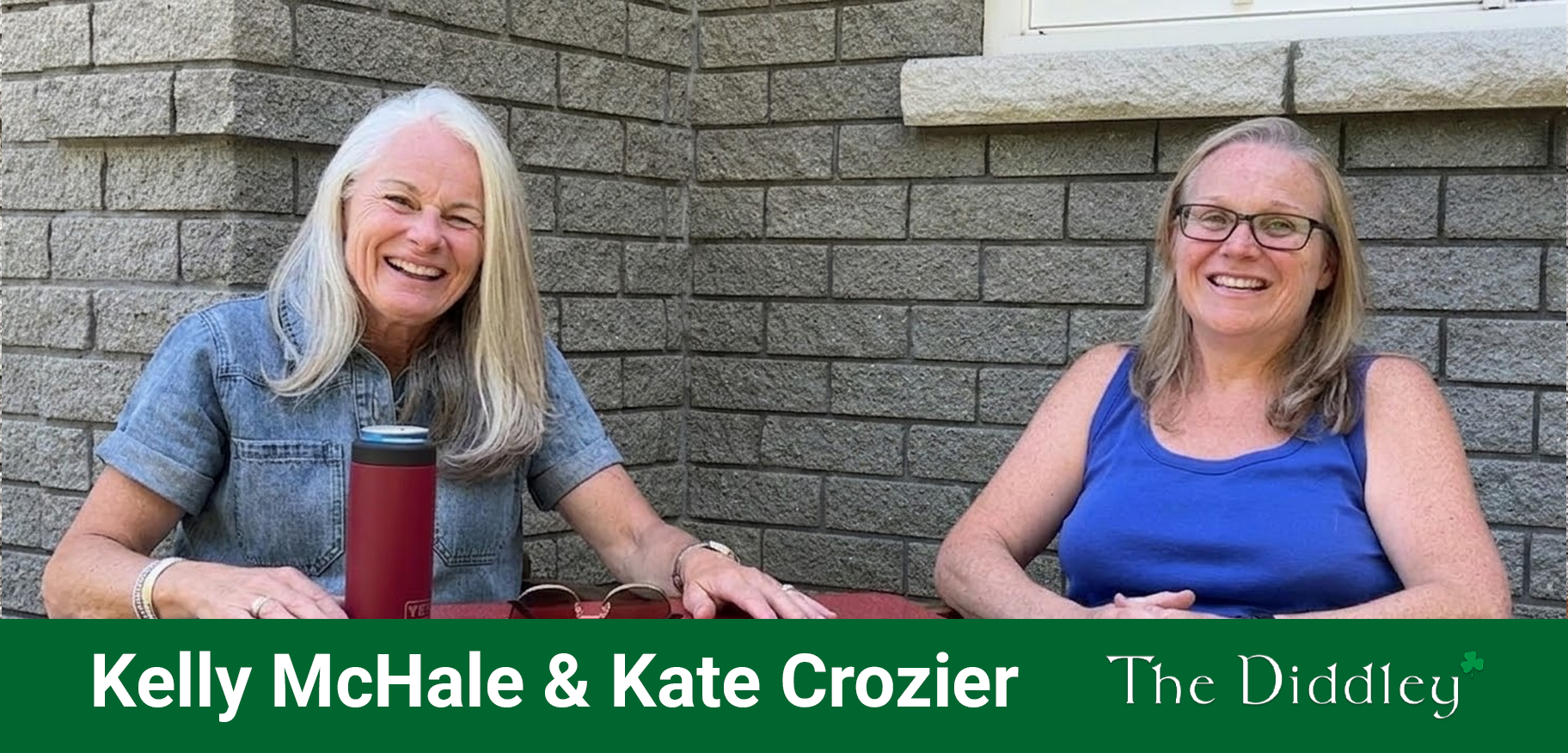
Kelly and Kate: Raised at The Diddley
There are some places you visit. And there are some places that raise you.
For Kelly and Kate, the Douglas Tavern was not something separate from childhood. It wasn’t a backdrop. It wasn’t a workplace they stopped into after school. It was simply home.
“That’s where we grew up.”
There’s no embellishment in the way they say it. No attempt to make it sound extraordinary. If anything, what stands out most is how ordinary it felt to them.
“We didn’t expect that our parents would take us places during the week because they were working. It was a 24-7 job.”
The Tavern wasn’t a nine-to-five operation. It wasn’t something you locked up and left behind. It demanded presence. It demanded time. And from an early age, they understood that. Not as a sacrifice—but as reality.
“And I think that was what we respected about it.”
Respect came before anything else. The doors were open. The work never really stopped. But neither did the sense of support around them.
“We always had family around to help, and we always had friends that were willing to get us.” The building was busy, but it wasn’t isolating. There were always people nearby. Always someone stepping in.
And when their mother could step away from the demands of the floor or the till, she did. “Especially Mom, when she could, she was always there taking us to school events, track meets, getting us involved in what she could.”
“It was a big commitment at the Tavern.”
They never went away on “quote, family vacations.” But that absence didn’t feel empty. “We had family around us all the time. Our aunts are more like sisters than aunts.”
School followed its path—St. Mike’s in Douglas, then onward—but one rhythm never changed.
“We were always home. Always home. Especially for St. Patrick’s.”
Even now, March isn’t flexible.
“You don’t plan to go away or do anything in March. You’re here in Douglas.”
And that’s the heart of it. Not obligation. Not routine. Just belonging.
An Acre Inside
If you were small enough, the Douglas Tavern was enormous.
“It was an acre inside.”
For Kate and Kelly, that space wasn’t intimidating. It was possibility. It was movement. It was territory to explore before the crowd arrived or after the lights dimmed.
“I don’t think there’s any other kid that could get up in the morning and slide down the stairs with a pillowcase, make the steel noise at the door, get up and find the money on the floor and go play Galaxia or the jukeboxes.”
That wasn’t a special occasion. That was growing up.
The stairs weren’t just stairs. They were a slide. The steel door wasn’t just an exit. It made a sound that marked the start of the day. The arcade game and the jukebox weren’t novelties — they were part of the landscape.
They learned the building the way other kids learn a backyard.
“There’s stuff that we did that we were fortunate to have.”
Fortunate is the word they choose. Not wild. Not chaotic. Fortunate.
They could “go to bed, listen to live music, listen to jukebox.” The rhythm of the Tavern filtered upstairs. Instead of bedtime silence, there was sound — music through walls, bass through floors. That noise wasn’t disruptive. It was familiar.
And there were hiding places.
“Knock on the wall and say, come in, like hide on your babysitter where they would never be able to find you.”
They laugh about it. The freedom to disappear inside a building that large. The freedom to test boundaries in a space that belonged to their family.
“A lot of places to hide.”
The Tavern wasn’t just where adults gathered. It was where two sisters learned how to move through a world that was bigger than most childhood homes. It gave them independence early. It gave them confidence. It gave them stories that start with sliding down stairs and end with jukebox songs they couldn’t always name.
“Never crickets at the Tavern.”
“No, you just couldn’t hear them.”
Outside might have been quiet. Inside, there was always something happening.
And inside that constant motion, Kate and Kelly grew up — not watching from the sidelines, but right in the middle of it.
After School at the Tavern Door
The school day didn’t end at a quiet house. It ended at a door that opened into whatever was already happening.
“There was regulars that we would come home from school. We’d come in the door and they’d say, ‘How was your day?’”
That greeting wasn’t occasional. It was routine. The same faces. The same stools. The same voices asking about spelling tests, track practice, or whatever had happened between morning bell and dismissal.
“And there was people there from Douglas that just greeted us every day when we came in the door from school.”
Every day.
For Kate and Kelly, the Tavern wasn’t just their parents’ business. It was a room full of adults who watched them grow up in real time. Men who showed up for pool tournaments. Familiar names that became part of daily vocabulary.
“Whether it was Bill Hodgins or Abby Burns or Stan Kilby, like they were staples in our quote household because that’s where they were. They were in our house all the time.”
Staples in the household. Not customers. Not strangers. Staples.
That’s what made it different.
“But that’s what we knew. That wasn’t normal. That’s what we grew up with.”
There was no separation between private life and public space. Their house had regulars. Their after-school routine included conversation with grown men who wanted to know how the day had gone.
“From kindergarten right through till university…”
The faces changed over time. Some of those men have passed away. But the pattern stayed the same. Walk in the door. Get greeted. Be seen.
The Tavern made them visible. It gave them an extended circle of people who paid attention — who noticed when they came in, who noticed when they were older, who remembered.
It wasn’t loud every minute. It wasn’t always a celebration. Sometimes it was just a handful of familiar people and the sound of cues striking pool balls.
But for Kate and Kelly, coming home meant stepping into a room where someone was always there to ask how your day went.
And that kind of consistency leaves a mark.
You Name It, We Were In It
Growing up inside the Douglas Tavern did not mean growing up on the sidelines.
Despite the constant movement of the business, Kate and Kelly were not kept from the rest of childhood. They were in it — fully.
“But they did give us every opportunity to do what we wanted to do. We were part of track and field, cross country, volleyball, basketball. You name it, we were in it.”
There’s no exaggeration in the list. It’s said plainly. If there was a team, they tried it. If there was a meet, they were there. Their lives were not limited to the walls of the Tavern, even if those walls framed most of their days.
“And they were behind us.”
Behind them. That’s the phrase that matters.
“They made sure that we were able to go, to be there, to be picked up, whatever it was.”
There’s an acknowledgment tucked into that — that it wasn’t simple. It required coordination. It required timing. It required someone stepping away from a bar, from a kitchen, from a crowd.
“My question is, where’d they find the time of the day to do everything?”
It’s not asked as criticism. It’s asked with disbelief. Because alongside the sports schedules and school commitments, there was still a Tavern to run.
“The day has 24 hours, and when we were growing up, it might have been only four to six hours that they would sleep.”
Four to six hours. And then back at it.
The girls didn’t miss out because their parents were busy. Instead, their parents stretched time. They rearranged it. They sacrificed rest so their daughters could run races, play games, stand on courts and fields like any other kids.
They weren’t shielded from the work. But they weren’t denied opportunities either.
And when Kelly says, “We couldn’t have been any more blessed, thankful, grateful,” it doesn’t feel rehearsed. It feels earned.
The Tavern demanded everything.
But somehow, there was still room for track shoes, jerseys, and late-night pickups after practice — proof that even in a building that never slowed down, childhood was protected.
Emptying Ashtrays
Before there were trays of drinks, there were ashtrays.
“I think you had to be 18 or 19 to serve. We were younger than that being in there.”
Long before they officially worked the floor, Kate and Kelly were already part of St. Patrick’s Day. Not in a spotlight. Not behind the bar. Just moving quietly through the room, doing what needed to be done.
“And everybody was allowed to smoke at the time. It was crazy. It was horrible.”
That’s how they remember it — thick air, crowded tables, noise layered over smoke.
“So my job was to empty ashtrays. So you would literally walk around and take a can, empty the ashtrays, and go from table to table cleaning out the ashtrays.”
It wasn’t glamorous. It wasn’t the kind of job you tell stories about later for fun. It was repetitive. Necessary. Physical.
“And don’t get me wrong, it was a job.”
There’s no complaint in that sentence. Just acknowledgment.
“And then you picked up empties, and we did just stuff around, but we weren’t actually part of the serving staff.”
They learned the rhythm of the room from the edges first. Watching. Listening. Understanding how people moved when it got busy. Seeing how quickly a table could fill and empty. Learning where the pressure points were.
Ashtrays. Empties. Sweeping. Scrubbing floors. Filling the beer fridge. The kinds of tasks that don’t get noticed unless they’re not done.
Growing up in the Tavern meant there was no sharp line between being a kid and helping out. When you were there, you worked in whatever way you could. And on St. Patrick’s Day — especially on St. Patrick’s Day — everyone had a role.
Emptying ashtrays may not sound like a rite of passage.
But in that building, it was.
It was the first step toward becoming part of something bigger than just the celebration — part of the machinery that made it run.
It’s a Different Personality
There comes a point when you stop circling the room with a can and start carrying a tray.
“When we went from emptying ashtrays and picking up empties… to serving beverages. That’s a whole other story.”
There was an age limit. A line you had to cross. And once they crossed it, the job changed entirely.
“You think about what you do on a day-to-day basis. And then you come and carry trays of beer, liquor, whatever. It’s a different personality.”
That’s how they describe it — not just a different task, but a different personality. Serving meant stepping into the current instead of standing at the edge of it. It meant balancing full trays through crowded rooms. It meant eye contact. Quick math. Reading faces. Keeping pace.
The floor during St. Patrick’s Day wasn’t calm. It wasn’t slow. It was movement layered on movement. And now they were part of that movement.
Kelly laughs about one detail.
“Kate smiles all the time. She gets more tips than I do.”
It’s lighthearted, but it says something real. Serving wasn’t just about getting drinks from bar to table. It was about presence. Expression. Energy. You weren’t invisible anymore. People knew your name. They watched you coming.
They had grown up watching their parents navigate that same floor — their mother steady at the till, their father moving through the room. Now they were inside it themselves.
There’s no dramatic description of nerves. No grand declaration of stepping into adulthood. Just a shift.
From background work to front-of-house.
From clearing tables to carrying responsibility.
The ashtrays taught them the mechanics. Serving taught them the rhythm.
And once you’ve carried a tray through a packed Tavern on St. Patrick’s Day, you understand something about balance — not just physical balance, but social balance. Timing. Tone. When to move. When to pause.
It wasn’t just a job.
It was initiation.
If It Happened in Douglas, We Were a Part of It
Long before they were old enough to understand tradition, Kate and Kelly were already inside it.
“It was just the way it was. Everything was there. So we got to be part of everything.”
That’s how they describe it — not as something special, but as something constant. The Tavern wasn’t just a place where events happened. It was where life markers landed.
“We were a part of people’s stag and does that maybe not necessarily we would have been at otherwise.”
In another life, they might have heard about these celebrations after the fact. Instead, they watched them unfold. Decorations going up. Music starting. Laughter building. The same couples returning years later with children of their own.
“Well, I’ll use us for example. We had our stag and doe there. And, well, everyone had their stag and doe there.”
It became a pattern. A cycle.
“So then a few years after that, one of my very good friend’s daughter’s stag and doe was there. So, you know, you watched — you were with the generations growing up.”
The building held time in layers. One celebration stacked on top of another. Familiar names coming back in new roles — first as the young couple, later as the parents of the young couple.
“And it was just… we were always a part of it.”
That phrase carries weight. Not watching from a distance. Not separate. Inside it.
Stag and does. Birthday parties. Wedding receptions. Funeral luncheons. They mention them plainly — as part of the rhythm. “We had lots of funeral luncheons.” The Tavern held joy and grief in equal measure.
It wasn’t just a bar. It was a place where milestones were marked. Where people gathered when something began — and when something ended.
For Kate and Kelly, that meant growing up with a front-row seat to the turning of other people’s lives.
They didn’t just grow up in a building.
They grew up inside generations.
What People Didn’t See
From the outside, St. Patrick’s Day looked like one long celebration. Music. Crowds. Green everywhere. But for Kate and Kelly, the day everyone remembers was built on months no one saw.
“Like six, eight months before mom starts calling the bands.”
The planning didn’t begin in March. It began the year before. Bands were “booked almost a year in advance.” The calendar was already turning toward the next one before the current one had even finished.
“The decorating would be different. You try to make it different every year.”
It wasn’t enough to repeat what worked. Each year had to feel fresh. Photos from the previous year were added to the walls. “People would bring in photos.” Others would travel and return with pieces to hang.
“People would go to Ireland and bring back the tea towels and bring back memorabilia.”
Those items didn’t sit in drawers. They became part of the room. Layer by layer, year by year, the Tavern carried its own history on the walls.
And then there was the ordering.
“Mom had to make sure that she had her booze ordered.”
One year, a beer strike complicated everything.
“So the beer strike was crazy. Try and make sure that we had enough of other alcohol. And you had to go and get it.”
It wasn’t panic. It was adjustment. If one supply ran short, something else had to fill the gap. There couldn’t be a moment when someone stepped to the bar and there was nothing to pour.
And then came the week itself.
“The sandwich making. And the jello shooter making.”
“That was all done… the week of.”
“Like you constantly… and we had to figure out, how are you going to store this many shooters?”
Trays. Boxes. Space carved out wherever it could be found.
“What the people see when they come in is not what happens in the background.”
The music starting at eleven. The crowd swelling by afternoon. The laughter spilling out the doors. That was the visible part.
Behind it was months of phone calls. Lists. Orders. Storage puzzles. Quiet stress.
It didn’t just happen that day.
It was built — piece by piece — long before anyone walked through the door.
If Someone Was Down and Out
The Douglas Tavern wasn’t only where people gathered to celebrate. It was where they went when something had gone wrong.
“And if someone was down and out, mom and dad were there to help.”
There’s no embellishment in that statement. No long explanation. Just certainty.
“Like, whether it was something actually physical, something that they needed, or a fundraiser that was done shortly thereafter to help. They were there.”
Sometimes help looked small. Groceries. A practical need. Something immediate and quiet. Other times, it grew into something larger — a fundraiser organized, people called, the room opened up for a cause.
It wasn’t framed as charity. It wasn’t announced as generosity. It was just what you did.
They mention CHEO. They mention the Lions Club. The River Run. “Dad was part of the Lions Club.” And when events were planned, the Tavern wasn’t separate from them.
“Mom gave everything to go through the Lions Club. Whether it was hot dogs and the barbecue and this and that.”
The building became infrastructure. A place to cook. A place to gather. A place to direct energy when something needed to happen.
They even recall moments that didn’t make headlines.
“The kids that didn’t have lunch at the school. Mom was taking food out there.”
No announcement. No ceremony. Just help delivered where it was needed.
When they describe their parents, one phrase keeps returning.
“They have been the pulse of the community.”
Not the spotlight. Not the centre of attention. The pulse.
A pulse is steady. It keeps things moving. It responds when something falters.
The Tavern may have been brick and mortar, but the work extended beyond the walls. It stretched into schoolyards. Into fundraisers. Into kitchens and parking lots and riverbanks.
And for Kate and Kelly, that wasn’t separate from growing up there.
It was part of the lesson.
If someone needed help, you didn’t look away.
You showed up.
And you were there.
Mom and Dad Were the Pulse
When Kate and Kelly talk about their parents, the language shifts. It becomes less about tasks and more about presence.
“I think that Mom and Dad were the pulse and the buildings were just the vessels.”
The Tavern. The fire hall. The farm supply. Side by side in Douglas. But to them, the buildings weren’t the point.
“They were the pulse.”
A pulse doesn’t demand attention. It doesn’t announce itself. It simply keeps things moving.
Whether it was St. Patrick’s Day or a snowmobile weekend in the winter, the doors were open. “In the wintertime, there was when Mom was open for the snowmobilers. Like, she would serve something hot for the snowmobilers that would come through in the winter when it was cold.”
It wasn’t seasonal attention. It wasn’t selective.
“Open.”
Even Christmas wasn’t fully closed.
“How many times at Christmas were we closed and Dad had to help somebody?”
The Tavern might have been shut for the day, but the responsibility didn’t disappear.
“It wasn’t just the Tavern. It was the place to go. It was, I need help. Oh, there. Okay. Go.”
Farm equipment. Towing. Dead batteries.
“It didn’t matter if it was Sunday or Saturday. Church, snow, sleet, hail, rain. Like, they were always there.”
Always.
That word surfaces again and again.
“They were always there.”
Not just when it was convenient. Not just when it was profitable. There.
And that steadiness is what built trust. It’s what made people return. Not just for a drink. Not just for a parade. But because they knew if they showed up, someone would meet them there.
The Tavern was brick and mortar. The counter. The stools. The sign outside.
But the reason it mattered was the consistency behind it.
“They genuinely cared. And they genuinely respect the people that are around them.”
The pulse wasn’t loud.
It was steady.
And Douglas felt it.
The Parade That Started as a Crazy Idea
Not everything began as a formal plan.
“It started off as a crazy idea. Let’s walk down the street and call it a St. Patrick’s Day parade.”
That’s how they describe it. No grand launch. No polished beginning. Just an idea — simple, almost offhand — that turned into something much bigger.
Preston. Billy. Art Jameson. “I know one time Robert Enright was involved.” Names come up the way they always do in small towns — casually, because everyone knows who they are.
“Somebody has to have the idea, but everybody has to build it.”
That’s what made it work. The Tavern was the natural focal point. People were already gathering there. The energy was already there. The parade just gave that energy somewhere to move.
“It worked out great that the Tavern was — that it focused around the Tavern.”
Once it started, it grew quickly.
“There were floats that came from every other territory to be a part of it.”
Preston made sure people knew about it. “The Heritage Radio station advertised it. They set up outside.” The Eganville Leader covered it. What began as something almost playful gained a reputation.
“The parade, although I think it only went nine years, it made its reputation very early.”
And even in its final year, “there was still a great turnout.”
It might have continued. “I think it would have gone for a few more years.” But COVID cut it short. “It was the right thing to do.”
Still, for those nine years, Douglas had something new stitched into its March tradition. A street filled with green. Familiar faces lining the road. Music spilling outward instead of inward.
It began with a walk down the street.
And it became another layer of memory tied to the Tavern — proof that in Douglas, sometimes a crazy idea is all it takes to build something lasting.
Music from Eleven to One
If you measure St. Patrick’s Day by the clock, it started early and ended late.
“Music started at 11 o’clock in the morning.”
Not in the afternoon. Not easing into the evening. Eleven.
“And finished at one o’clock at night.”
Fourteen hours of music. Fourteen hours of keeping a room moving.
“She booked music from here to here, here to here. Here’s this.”
It wasn’t random. It wasn’t whoever was available. It was scheduled. Layered. One band finishing, another stepping in. No gaps wide enough for the energy to drop.
And the work didn’t stop at booking.
“Not only did she book the music, but fed them in the background.”
Before they played. After they played. The musicians went into the kitchen. They ate. They came back out. The transition was seamless.
“They went out the back door, they came in this door.”
Traffic controlled. Equipment managed. Speakers set up and taken down. The crowd rarely saw any of it.
“She organized it in such a way that it was seamless. And the crowd enjoyed everything.”
That word again — seamless.
People remember dancing. They remember the tables. They remember the sound carrying through the building. What they don’t always remember is the structure underneath it.
The timeline. The meals. The coordination of entrances and exits. The understanding that if one piece faltered, the entire day could shift.
But it didn’t.
The music flowed from morning into night. Early-day regulars gave way to afternoon visitors. The room shifted and refilled.
By the time one o’clock arrived, it felt like a single continuous celebration.
But behind it was a schedule tight enough to hold fourteen hours together.
And someone watching every minute of it.
Getting Everyone Home
The responsibility didn’t end when the music stopped.
For Terry and Evelyn, closing time wasn’t just about clearing glasses or locking doors. It was about making sure the night ended the right way.
“So there was so many times the buses would come. Buses would bring people here, drop them off, and they would take them.”
Transportation was part of the plan. People arrived together. They left together.
But it went beyond that.
“And then you drove them home.”
It wasn’t unusual. It wasn’t exceptional. It was expected.
“And then 20 years later, they’re still your friend because you drove them home.”
That line says more than it appears to. Driving someone home wasn’t about liability. It was about care. It created connection. It created memory.
“That was part of what you did.”
Part of what you did.
“It wasn’t just about getting everybody out. It was getting everybody out safely.”
There’s a difference.
“It wasn’t just get out. It was get them home safely.”
That was the standard.
If someone needed a ride, it was arranged. “It was always arranged. Always.” No one was left to figure it out alone.
And Terry had a line he would say.
“Dad always said, ‘May God go with you because I can’t. I have to stay here.’”
He stayed. He remained in the building. The responsibility anchored him there.
The Tavern was a celebration space. It was loud. It was crowded. It was alive.
But at the end of the night, the measure of success wasn’t how long the party lasted.
It was whether everyone made it home.
That was the part people didn’t always see.
But it was the part that mattered most.
The 5:20
After two straight weeks of St. Patrick’s Day energy, something quieter began to take shape.
“Well, I think it sort of started after St. Patrick’s Day because you would see everybody for two weeks straight.”
For days at a time, the Tavern was full. Familiar faces. Long conversations. The kind of connection that only happens when people gather repeatedly in the same place.
“And then somebody said, why is it that we only get together like this in March?”
That question lingered.
“So they said, well, we should do this every Friday.”
It wasn’t a formal club. It wasn’t structured. It was called the “5:20” because “by the time people would get there,” that’s when it began. Sometimes it happened. Sometimes it didn’t.
“Sometimes the 5:20 didn’t happen, and sometimes it lasted an hour, and sometimes it lasted until the place closed.”
There were no strict rules. Just a pattern.
“But it became every Friday for about two years before it shut down that people were coming.”
Some nights they ordered pizza. Some nights Chinese. “They ordered food, sometimes not.” It wasn’t about the menu.
It was about gathering.
“I would come home once a month and I would say, oh, the 5:20 is having a guest speaker.”
There’s laughter in that memory. “I talked about taking minutes. That didn’t last long.”
It was informal. Fluid. Come if you could. Leave when you needed to.
“It was just a gathering.”
That phrase returns often when they talk about the Tavern. Not just a bar. Not just an event space.
“At the end of the day, you can call it a Tavern, you can call it the Douglas Hotel, you can call it Diddley. At the end of the day, it’s just a gathering place.”
The 5:20 wasn’t loud like St. Patrick’s Day. It didn’t spill into the street. It didn’t need bands booked months in advance.
It was smaller. Steadier.
A reminder that what brought people back wasn’t always the celebration.
Sometimes it was simply the habit of showing up — together.
The Year Everything Changed
For a long time, St. Patrick’s Day at the Tavern ran on trust.
“Because everybody was there,” Kate says.
It wasn’t anonymous. It wasn’t a crowd of strangers drifting in from nowhere. It was familiar faces. People who had been coming for years. People who had grown up in the same town, who had danced in the same room, who returned each March because that’s where you went.
“It was like a reunion.”
That word matters. A reunion carries history. It carries recognition. It carries an understanding that everyone belongs.
“There was no one, as with most parties, no one was there to try and cause trouble.”
She doesn’t hesitate before saying it again.
“There never ever was trouble. Never.”
But one year marked a turning point.
“It got hit hard the year that the liquor inspector came in.”
There’s no anger in her voice when she says it. No dramatics. Just a fact placed squarely in the timeline.
“He recognized the fact that, you know, there was a few infractions.”
After that, the atmosphere shifted.
“And then after that it lost a lot of its fun because you had to be so diligent about how many people were in the room.”
Diligent. Careful. Counting.
“How many people were coming through the doors and going out the doors.”
The doors themselves became part of the focus. Not just entryways, but checkpoints. What had once been fluid now required monitoring. The natural swell of the room had to be measured against a number.
The hardest part wasn’t the counting. It was what followed.
“And then when you have to start telling people that they can’t come in because we have too many… it’s hard because that’s not the way that it was.”
For years, there had been lineups. Waiting wasn’t new.
“There was always a lineup but there was never you can’t come in.”
That phrase — you can’t come in — didn’t belong to the old St. Patrick’s Day. The celebration had always expanded to hold whoever showed up. Now it had a ceiling.
“And that is really the year that it changed.”
She doesn’t talk about fewer people. She doesn’t talk about smaller crowds. She talks about feeling.
“It changed the stress level. It went from a lot of fun to a lot of… policing.”
Policing.
It’s a word that sits uncomfortably beside reunion. It suggests watchfulness instead of welcome. Control instead of flow.
The music still started in the morning. The bands still played. The decorations still hung. But behind the scenes, attention shifted from celebration to compliance.
The responsibility had always been there. Now it felt heavier.
Not because the people had changed.
But because the rules had.
And once that shift happened, the day was never quite the same again.
Mom on the Till, Dad on the Floor
When Kate and Kelly look back at St. Patrick’s Day — and at the Tavern in general — they don’t describe chaos. They describe choreography.
“The funny thing is, like, when you look back, and it’s true, mom worked the till. She was on the floor from 11 o’clock in the morning until 2 o’clock at night. She was on the till.”
Eleven to two. Not stepping in and out. Not rotating. Fixed.
While their mother stayed planted, their father moved.
“And dad would mill the floor.”
Mill the floor. Not stationed. Not behind the bar. Moving.
“And he was the… do you want to call it PR?”
That’s how they frame it. Public relations before the term felt corporate. He circulated. He talked. He checked in. He greeted people when they came through the door and often was the one they were looking for.
“Mom and dad were the people they looked for when they came through the door.”
That detail matters. On St. Patrick’s Day especially, people didn’t just arrive for music. They arrived to see them.
“They got to find him. And sometimes he was in the back corner and sometimes he was outside, but you always got him.”
He was accessible. Present.
Meanwhile, their mother held the centre.
“She organized it in such a way that it was seamless.”
Bands rotated. Food appeared. People moved in and out. The till ran continuously. And from the outside, it felt effortless.
But the effort was divided — deliberately.
One steady. One circulating.
There’s a line Kelly says that echoes when describing them both:
“Behind every good man there’s a greater woman.”
She says it lightly, but there’s conviction underneath.
The Tavern functioned because they functioned — as a pair.
Not competing roles. Complementary ones.
One anchored the room.
One animated it.
And together, they held it steady for decades.
When COVID Cut It Short
For nine years, the St. Patrick’s Day parade ran through Douglas. It grew quickly. It built a reputation. And even near the end, “there was still a great turnout.”
“I think it would have gone for a few more years,” Kate says.
There’s no doubt in her voice about that. The momentum was still there. The crowd was still there. The appetite for it hadn’t faded.
“And it was still, I think it would have definitely still been around when the Tavern was closing.”
But something no one planned for intervened.
“And, you know, unfortunately, with COVID, it cut it short.”
There’s no long explanation. No extended reflection. Just the fact of it.
“It was the right thing to do.”
That’s how she frames it. Not as a frustration. Not as an injustice. As the right decision.
The parade stopped. The gatherings stopped. The pattern that had defined March — and much of the year — was interrupted.
St. Patrick’s Day had always meant people shoulder to shoulder. Music running for hours. Doors opening and closing constantly. COVID made that impossible.
And while the Tavern’s story stretches back decades, COVID marked a clean break in one part of it.
The parade didn’t wind down slowly. It didn’t lose interest. It didn’t fade from lack of support.
“It cut it short.”
There’s something stark about that phrasing. A sense of momentum halted mid-stride.
The parade had started as “a crazy idea.” It had become tradition. And then it stopped — not because Douglas stopped caring, but because gathering itself had changed.
“It was the right thing to do.”
In that sentence, there’s acceptance.
And also the quiet recognition that some traditions end not because they are finished — but because the world shifts underneath them.
After the Doors Closed
When the Tavern closed, the change in Douglas wasn’t loud. It was subtle. But to Kate and Kelly, it was immediate.
When asked if the town feels quieter now, the answer comes without hesitation.
“Oh, most definitely.”
“Yeah, most definitely,” Kate says. “I mean, especially working next door to it.”
She sees the difference daily. The building is active. There is movement.
“Well, not without traffic. There’s tons of traffic going in and out of there. They’re doing amazing, but it’s not the same. They’re passing through.”
Passing through.
That’s the shift. For decades, people didn’t just pass through Douglas — they returned. They planned their trips around it. They walked in looking for someone specific.
“Nobody’s coming back to reminisce. Nobody’s coming back for a reunion.”
That’s what feels absent. The pause. The catching up. The standing in the same room and remembering.
“It’s still town, it’s still Douglas, but it’s just missing that part.”
And yet, there is no bitterness in the way they speak about the people there now.
“I think Amanda is the right person to be in that building. She’s doing a great job.”
“She loves the building. She loves Douglas.”
There’s warmth in that acknowledgment. The building matters to her. The town matters to her. That carries weight.
They talk about how she has tried to keep the sense of gathering alive — inviting people for coffee, suggesting potlucks, encouraging connection even if it looks different now.
“The people that are down there now, they have been amazing to mom and dad.”
That matters deeply.
“They’ll get them to come back anytime they want.”
When their mother goes in, “they treat her with respect.” They show her what they’re doing. They ask her opinion.
“Ask mom what she thinks about what they’re doing. What else does she think they should do?”
There’s continuity in that. Not the same rhythm as before — but respect for what came before.
“They’re excited when she comes in.”
That detail says more than anything else.
The Tavern may have closed under Terry and Evelyn. The reunion energy may not draw people back the same way. But the building is not empty of care.
Douglas is still Douglas.
“They’re doing amazing.”
It’s different. It’s missing something steady and familiar.
But there is still love for the building.
And there is still respect for the people who once held it.
They Are a Pair of Phenomenal People
At the end of the stories — after the music, the parades, the long shifts, and the years — what remains is not just memory of a building.
It’s gratitude.
When asked what they would want to say to their parents, the emotion surfaces quietly but clearly.
“It doesn’t matter if they’re at the Tavern or if they’re at the farm or where they are, they’re always going to be our parents and they are a pair of phenomenal people.”
There is no performance in the words. No exaggeration. Just certainty.
“They’ve always been there for us. They’ve always been there for our entire family.”
The Tavern may have been public. Their parents may have been visible. But the steadiness began at home.
“They have been the rock for everyone.”
Rock. Pulse. Anchor. The language shifts throughout their reflections, but the meaning remains the same. Stability. Presence. Reliability.
“And it’s something that they have passed down.”
The lessons didn’t stay behind the bar or at the till. They carried forward.
“We’re there for them now.”
It’s said simply. Roles change. Years move on. The daughters who once slid down the stairs and emptied ashtrays now stand ready in return.
“And so are a lot of people.”
That’s the part that closes the circle. The care Terry and Evelyn gave did not disappear when the doors closed. It multiplied.
“And that’s when they need us, we’re there.”
And then the sentence that holds everything together:
“They’ve taught us family is first.”
Not business first. Not reputation first. Family.
The Douglas Tavern was a gathering place. It was a celebration space. It was part of Douglas for generations.
But what Kelly and Kate thank their parents for isn’t the building.
It’s the example.
And that, more than anything else, is what endures.