
Listen to this section with narration
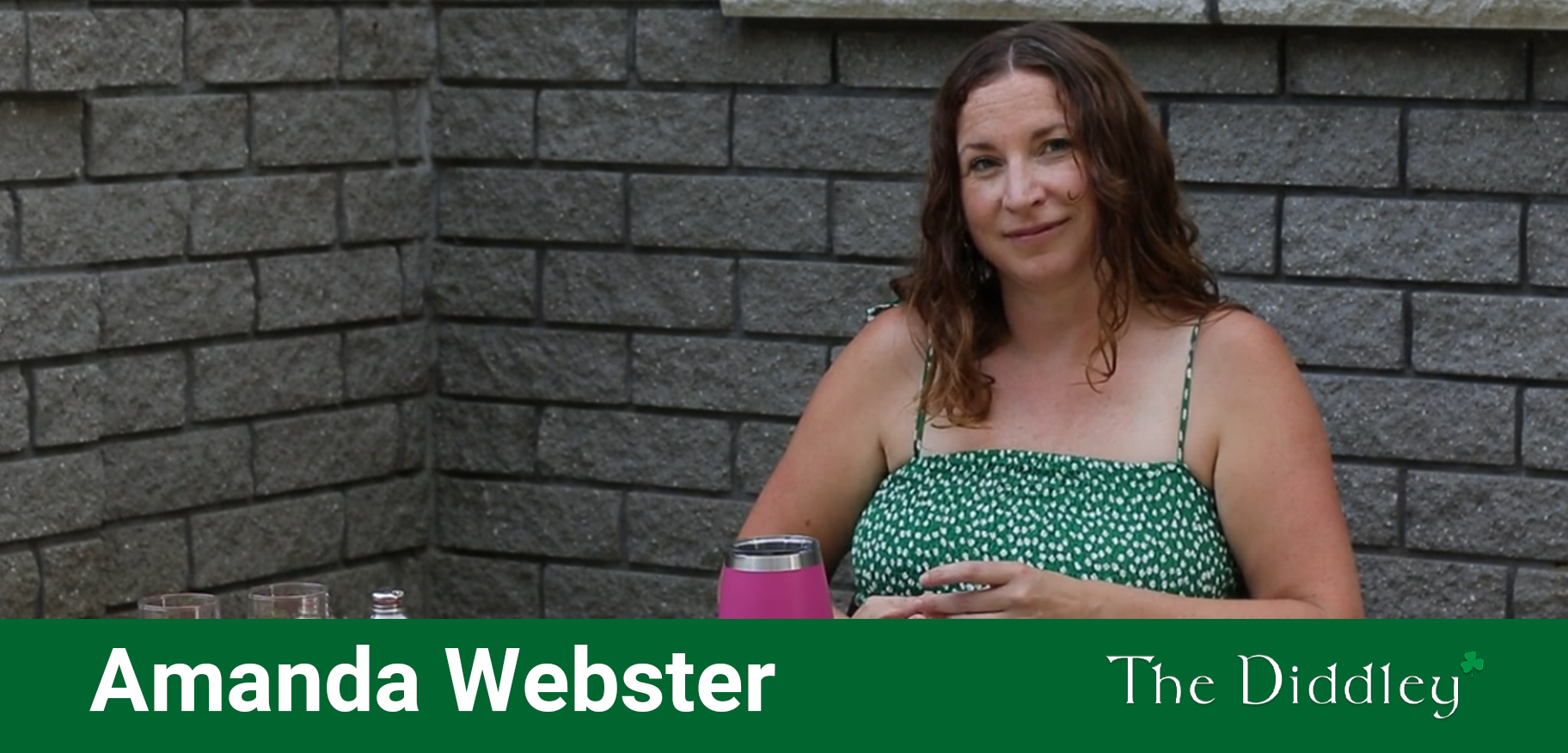
Amanda Webster: Coming Back to Where It All Began
Amanda’s relationship with The Douglas Tavern wasn’t just built on barstools or drink tickets—it was built in the quiet corners of family gatherings, games of hide-and-seek, and decades of shared laughter. As the niece of Terry McHale, Amanda grew up with the Tavern in the background of every celebration, never quite knowing how much it would mean to her until she left—and came back.
“My name is Amanda Webster and Terry and Evelyn are my aunt and uncle,” she says. “My dad, Jim, is Terry’s brother.”
As a kid, Amanda didn’t see The Diddley the way patrons did. To her, it was family space—a place where Christmases were held and cousins from Ottawa came to visit. “That’s where we spent our… our McHale Christmases,” she recalls. “There’d be lots of, you know, birthday celebrations or anniversaries, stag and does.”
She and her cousins weren’t old enough to go into the bar, but they made their own fun upstairs. “We could spend time in the living area of the Hotel,” she says. “It was pretty fun to kind of sneak around and peek, see what people were doing and get into some pretty good games of hide-and-seek.”
Still, she counted down the years until she could finally join the crowd for the most iconic day of the year—St. Patrick’s Day. “The first time I went was after I turned 19,” she remembers. “This was highly anticipated. I was pretty excited to get there.”
That first legal St. Paddy’s felt like more than a night out. “It really felt like kind of what I would imagine a homecoming would feel like,” she says. “Just so many familiar faces.” The energy was different than anything she’d seen as a kid. “There wasn’t the same jam-packed crowd,” she explains. “But to be there on that day and to have just throngs of people around was pretty cool.”
Amanda’s connection to the Tavern deepened even more when she returned to Douglas in 2019—this time as an adult, a mother, and someone fully aware of what this place meant. “Coming back to this area just a couple of years ago… it felt so great to be able to get back there and see so many friendly faces.”
What started as a childhood backdrop had become something more: a symbol of home, community, and belonging. Not because she worked there, and not even because of blood ties—but because it was always waiting for her.
From Hide-and-Seek to Heritage: Childhood Inside the Hotel
Long before Amanda knew what The Diddley meant to the community, she experienced it through the eyes of a child—running through its halls, peeking around corners, and quietly absorbing the energy of a place that was always full of life.
“That’s where we spent our… our McHale Christmases,” she shares. “They were always held at the Hotel.”
For Amanda, those early days weren’t about bartenders or beer taps. They were about family and familiarity. Whether it was birthday parties, anniversaries, or stag and does, she was there—not quite part of the adult celebrations, but never far from the joy.
“I wasn’t quite old enough to be in the bar,” she says, “but my cousins would come up from Ottawa and we could spend time in the living area of the Hotel.”
That upstairs living space became their private world. The Tavern itself may have been hosting grown-up laughter and late-night conversations, but for Amanda and her cousins, it was the perfect place for games, giggles, and hiding spots.
“It was pretty fun to kind of sneak around and peek, see what people were doing, and get into some pretty good games of hide-and-seek,” she remembers fondly.
What Amanda experienced as childhood play was, in hindsight, something more foundational. Those visits rooted her in a sense of belonging—to her family, yes, but also to a building that held generations of stories. The Douglas Tavern was never just a place for adults to gather. It was a multigenerational space where everyone—from toddlers to seniors—had their corner of connection.
And because her family ran the Hotel, those memories came with a unique sense of pride. She wasn’t just visiting someone’s event—she was growing up in the very heartbeat of the town.
The stories weren’t told to her then—they were lived. She could feel the warmth of the holidays, hear the music floating from the bar below, and see the generations before her coming together over shared traditions. Looking back, it wasn’t just fun—it was legacy in the making.
Amanda didn’t always realize it, but those early days of hide-and-seek helped shape her sense of identity. The Hotel wasn’t just where Christmas happened. It was where she learned what togetherness looked like—before she even had the words to name it.
A Change of Heart: Learning to Love Where You’re From
Amanda didn’t always feel connected to Douglas. As a teenager, like many others growing up in a small town, she dreamed of more—of something bigger, faster, and further away. The Tavern, the traditions, the tight-knit community? It all felt a little too close.
“To be honest, when I was growing up, this wasn’t where I really wanted to be,” she admits. “I did love my family. I loved the fun. I loved the get-togethers. But it felt kind of small. And I didn’t appreciate that at the time.”
She left Douglas, carrying with her a sense of independence and a desire to see what else the world had to offer. But something happened as the years went by. When she’d hear about the events she was missing—birthdays, holidays, spontaneous nights at the Tavern—something inside her shifted.
“When I moved away and would, you know, hear of the events that were going on here, hear of get-togethers and things… I did feel like I was missing out on them a bit.”
Time and distance gave her something she couldn’t see before: perspective. And slowly, what once felt small began to feel rare—and deeply valuable.
“My sense of pride just kept growing and growing and growing,” Amanda says.
That pride wasn’t just about the past. It was about witnessing the next generation carry the torch. “The generations younger than me—I just thought it was so special how they were kind of keeping the traditions of getting together and, like, being family friends,” she reflects. “Generations of people hanging out. I just thought that was really beautiful.”
Eventually, the pull home became too strong to ignore. And when she returned to Douglas with her children, the welcome they received showed her just how lasting those roots really were.
“My children would get to know their cousins back here. And when we made the decision to come back, I could not have been happier or just more grateful for the welcome that they received. It was like they were also coming home—even though they had never lived here.”
That’s the kind of place The Diddley helped shape. A place where even the second generation finds belonging without hesitation. A place that knows how to hold on to its people—even the ones who once felt far away.
A Community Built on Welcome: The Return That Felt Like Home
When Amanda returned to Douglas with her family, it wasn’t just a move. It was a return to something meaningful. Though she had grown up in the town, her children hadn’t lived there. Still, the moment they arrived, something remarkable happened—they were welcomed as if they had always belonged.
“When we made the decision to come back, I could not have been happier or just more grateful for the welcome that they received,” Amanda shares. “It was like they were also coming home—even though they had never lived here.”
It’s easy to underestimate what that kind of welcome means, especially in a small town where everyone knows each other and roots run deep. But Amanda didn’t see judgment or distance. What she saw was community at its best—warm, open, and generous.
“The bonds are that strong,” she says with quiet certainty. “It’s pretty amazing. I don’t think it’s like this in a lot of places.”
She reflects on the contrast between what she once wanted—something bigger than Douglas—and what she came to value. The same place she once felt too small had become the place she most wanted her children to experience.
“They got to know their cousins back here,” she says. “They got to sit at these tables, drink ginger ale, and be part of something.”
In Amanda’s story, the idea of “home” isn’t about where you live. It’s about where you’re embraced. The Diddley, and Douglas more broadly, created a space where newcomers (even returning ones) were not outsiders—they were simply part of the circle, no questions asked.
That embrace didn’t just extend to her family—it came from her family, too. Terry and Evelyn didn’t just run the Tavern. They nurtured a space where everyone felt like kin.
“You invited all of us into it,” Amanda says to them. “You were just consummate host and hostess and put up with a lot of shenanigans… always with a smile. So appreciated.”
In Douglas, and especially at The Diddley, you don’t earn your place—you’re given it, freely, and with open arms. And that, Amanda knows, is what makes this place unlike anywhere else.
Legacy in Every Note: Music, Memory, and Belonging
Some legacies aren’t written—they’re heard. For Amanda, one of the most powerful ways she connected to her heritage and her sense of place was through the music inside The Diddley. It wasn’t about concerts or headliners. It was about the stories that unfolded through song, filling the Tavern with echoes of the past.
“I just would like to acknowledge that I’m so lucky to have had the experience there,” she says. “Because it really, like… through different things—through the songs that I heard the musicians play there, through stories that I heard told there, through just seeing different generations interact with each other—I got a really huge sense of pride.”
That pride wasn’t abstract. It was personal. Amanda found herself connecting not just to her immediate family, but to something deeper—a lineage, a rhythm, a shared identity rooted in Irish tradition and rural resilience.
“I don’t know if, without the Hotel, I would have appreciated my ancestry as much as I do.”
She doesn’t try to explain every detail. Some things are better felt than explained. “Just to hear the old Irish songs and to kind of feel the—I don’t even know how exactly to describe it,” she says, pausing. “But to feel—you feel like it actually was part of who you are.”
That phrase—“part of who you are”—captures the heart of what The Diddley gave her. The Tavern wasn’t just a place where songs were played. It was where identity was passed down—not through formal lessons, but through moments. Through gatherings, laughter, shared glances, and lyrics that had traveled across oceans and generations.
“It was just this bit of history,” Amanda says, “that only really revealed itself through the time we spent there at the Hotel. It was really neat.”
These aren’t the kinds of lessons you find in school or history books. They’re the ones you inherit by being in the right place, with the right people, at the right time. And The Diddley was always that place for Amanda.
Legacy doesn’t always come with a nameplate. Sometimes, it comes with a tune you can’t forget and a feeling that tells you—you belong.
The 5:20 Fridays: Unplanned, Unofficial, Unforgettable
When Amanda speaks about the recent years she spent back in Douglas, there’s one memory that stands out—not a big event or formal occasion, but a quiet ritual that came to mean everything: the 5:20 Friday gatherings.
“A great group of people from Douglas had kind of organized themselves to meet up every Friday night and have a little 5:20 gathering,” she recalls. “It was just casual, you know, come as you are, people coming in after work—low expectation, but very high reward.”
There was no official invite. No dress code. No big event. Just friends and neighbors showing up. That was the magic.
“In a place where it’s so cold all winter, this was a huge kind of draw,” Amanda explains. “Even though there was nothing specifically organized, you got to congregate with your friends and neighbors, have some good chats.”
The group didn’t need decorations, live music, or themed nights. The reward wasn’t in the entertainment—it was in the connections. People arrived with their stories, their laughter, their burdens from the week—and left a little lighter.
“Sometimes just beautiful conversation, lots of good memories, everybody kind of reminiscing about things,” she says. “There was no event happening. It was just people getting together.”
It’s a detail that might seem small from the outside, but to Amanda—and clearly to others who participated—it was deeply meaningful. This was Douglas at its best: familiar, welcoming, effortlessly communal.
“I think that was fabulous,” she says simply. “I definitely will miss that.”
The 5:20 Fridays became a kind of therapy, a rhythm of reconnection in the post-lockdown haze. And they highlighted what The Diddley had always been at its core—not a venue, but a vessel. A place where people gathered because they wanted to, not because they were told to. A place that was always there when you needed it.
Even in a time of uncertainty and global upheaval, people instinctively found their way back. No announcements. No plans. Just 5:20 and a shared understanding: this is where we belong.
When the World Paused: St. Patrick’s Day and the Pandemic
When Amanda returned to Douglas in the fall of 2019, she looked forward to reconnecting with everything she had missed—especially St. Patrick’s Day at The Diddley. But just months after settling back home, the world changed.
“I moved back to Douglas in the fall of 2019,” she recalls. “COVID started in… the winter of 2020.”
She had made it in time for the pre-pandemic buzz. The parade went ahead that year, filling the town with its usual excitement. “The parade happened on the Saturday night,” Amanda says. But the joy was short-lived.
“That week before St. Patrick’s Day, everything kind of like gradually started shutting down.”
It was surreal. The weekend had felt so normal, so familiar—then everything stopped. For Amanda and so many others, the sudden shift felt personal. St. Patrick’s Day at The Douglas Tavern wasn’t just another holiday. It was the beating heart of the community.
“We did pop in on St. Patrick’s Day, actual St. Patrick’s Day, and have a beer with Terry and Evelyn,” she remembers. “Just kind of process what was happening with the whole thing.”
There’s a quiet weight to how she says it. That visit wasn’t just about having a pint. It was about grappling with what everyone was losing—at least temporarily.
“It was quite… like the events of that week were pretty crazy,” she says. “It was disappointing, but also really… there was nothing else you could do because you want to make sure that everyone was safe.”
For Amanda, the disappointment didn’t just stem from canceled celebrations—it came from watching something so deeply connected to her family and her sense of place suddenly go still. The Douglas Tavern had always been a constant. Lively. Loud. Full. And now, it was facing uncertainty like everything else.
“Pretty sad too,” she adds, and lets the moment sit there.
What stands out in Amanda’s reflection isn’t frustration or bitterness—it’s care. Care for the people around her, care for the legacy of the Tavern, and care for the safety of the community. Even in that moment of pause, the spirit of The Diddley—resilience, togetherness, and heart—was alive.
And in her voice, you can still hear the hope that it would all come back again.
Not Just A Bar: The Diddley as a Living Archive
In Amanda’s eyes, The Douglas Tavern wasn’t just a business or even a family legacy—it was a living, breathing archive of stories, emotions, and shared history. Sitting at those tables, surrounded by familiar faces, meant participating in something larger than any one person or generation.
“You feel like it actually was part of who you are,” Amanda says.
That sense of identity didn’t come from grand gestures. It came through simple moments: the sound of old Irish songs, the storytelling between generations, the way people made room for each other at the table. Over time, those details layered into something powerful.
“It was just this bit of history that only really revealed itself through the time we spent there at the Hotel,” she reflects. “It was really neat.”
Amanda’s memories paint The Diddley as more than a social space—it was an informal museum of lived experience. There were no plaques or guided tours, but the culture was carefully preserved in the rhythms of conversation and the familiarity of tradition. You didn’t need to study it. You just had to show up, listen, and be present.
And because it wasn’t curated or packaged, it remained real.
“Through different things—through the songs that I heard the musicians play there, through stories that I heard told there, through just seeing different generations interact with each other,” she says, “I got a really huge sense of pride.”
That pride wasn’t just for her family—it was for the whole community. For Amanda, The Diddley gave her a lens to see where she came from with fresh eyes. It didn’t try to teach her history. It let her live it.
She talks about how music connected her to her ancestry, how gathering there made her feel a part of something deeper. And it wasn’t about nostalgia—it was about truth. Real people. Real stories. Shared space.
That’s why she hopes it survives—not as a replica of the past, but as a continuation of what it always was: a place that holds the town’s memories in its bones and offers them freely to the next person who walks through the door.
Generations Gathered: The Power of Staying Connected
Amanda has seen something rare happen in Douglas—something that many communities struggle to maintain over time. It isn’t just that people come together for a party or a holiday. It’s that they keep coming together, across generations, maintaining relationships that could easily fade in a different place. And The Diddley was at the center of that.
“The generations younger than me—I just thought it was so special how they were kind of keeping the traditions of getting together,” Amanda says. “And like, being family friends—like generations of people hanging out.”
There’s a quiet awe in her voice as she says it. She’s not just talking about a few people staying in touch. She’s talking about a cultural rhythm—an understanding that gathering matters. That relationships are worth nurturing. That a place like The Douglas Tavern helps anchor those connections.
“You’d come back for holidays and stuff,” she says. “And my children would get to know their cousins back here.”
What might seem ordinary in Douglas—sharing space, overlapping lives, knowing your neighbors’ children—becomes extraordinary when you step away from it. Amanda experienced that distance, and it made the return even more meaningful.
“When I would tell people about what it was like where I grew up,” she recalls, “I think the more I talked about it, the more I realized… even though it wasn’t necessarily where I had wanted to be, it was where I wanted to be now as an adult.”
There’s something powerful in that realization. Amanda came back to a place that still valued the bonds she’d grown up with—and that hadn’t let go of them. The Tavern may have changed hands, the town may have shifted, but the instinct to gather remained strong.
In many communities, those traditions slowly slip away, replaced by distance, screens, or schedules. But in Douglas, and especially at The Diddley, those ties held firm.
That’s the kind of place Amanda hopes it continues to be: not just a space to visit, but one to return to. A place where generations don’t just remember each other—they still show up, side by side.
The Quiet Impact: Gratitude for Terry and Evelyn
As Amanda reflects on her lifelong connection to The Douglas Tavern, her memories keep returning to two people: her aunt and uncle, Terry and Evelyn McHale. They weren’t just the owners of the Tavern—they were its heart. And while many remember the events, the music, and the laughter, Amanda doesn’t want their quiet, consistent generosity to go unnoticed.
“You invited all of us into it,” she says directly, a message clearly meant for them. “And you were just consummate host and hostess.”
That word—“invited”—matters. For Amanda, Terry and Evelyn didn’t just run a business. They opened their lives. The Tavern wasn’t just a bar to them—it was their home, and by extension, it became everyone’s home. Family, friends, neighbors, and even strangers were treated with the same warmth and welcome.
“You put up with a lot of shenanigans and a lot of kind of silly times,” Amanda laughs, “but always with a smile.”
Her gratitude runs deep—not just for the memories, but for the way those memories were made possible. Through good times and challenges, Terry and Evelyn remained steady presences, offering space, laughter, and patience.
“And so appreciated,” Amanda says simply. No need for big speeches—just genuine thanks.
She remembers bringing her kids in for visits, letting them experience the same magic she had known in her own youth. Even in those everyday moments—letting them sit at the tables with a ginger ale—Terry and Evelyn made them feel special.
“Thanks for being patient,” she says to them. “And thanks for, you know, the times when we would visit and I would bring the kids in and they would get to have a ginger ale and sit at these tables. It’s pretty special.”
That’s what The Diddley was, and still is, in Amanda’s memory: special. Not because of flashy events or renovations, but because of the people who made it real. Terry and Evelyn didn’t just serve the town—they served its spirit, its joy, and its legacy. And through Amanda’s words, that gratitude is now part of the written record.