
Listen to this section with narration
A New Chapter Begins Amanda, Dan, and the Rebirth of the Douglas Tavern
In every small town, there’s a place that means more than just bricks and mortar. A place that holds memories like a photo album, where the clink of glasses and the hum of laughter echo across generations. For Douglas, Ontario, that place was the Douglas Tavern — or as locals fondly called it, The Diddley. Under the loving care of Terry and Evelyn McHale, The Diddley became more than a bar. It was the heart of the village, a gathering space, a storyteller, a stage, and for many — home.
When word got out that Terry and Evelyn were retiring and putting the Tavern up for sale, it was more than just real estate changing hands. It was the end of an era. The community braced itself for what would come next. Would it be bulldozed? Turned into condos? Gutted and flipped with no regard for its soul?
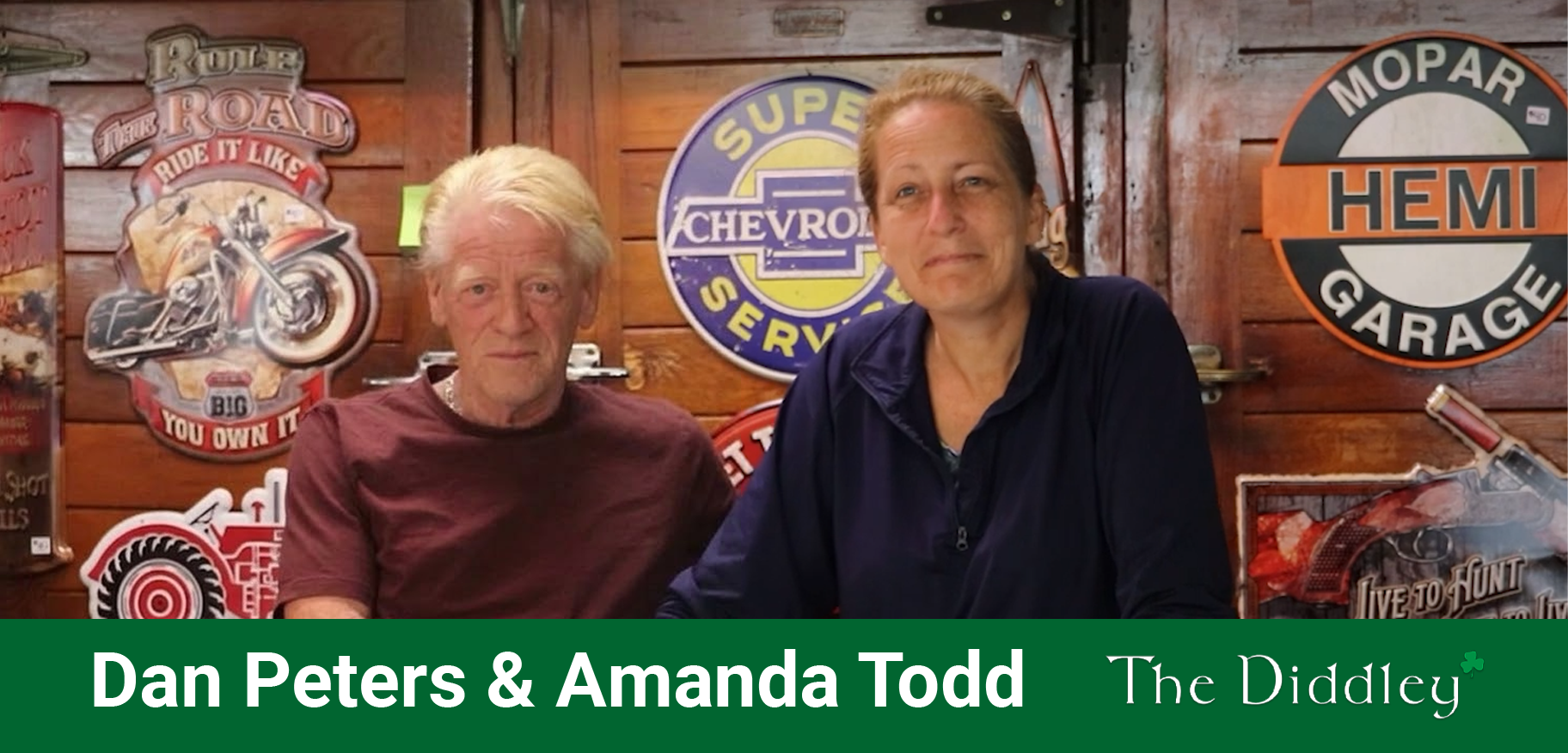
And then — like something out of a storybook — in walked Amanda Todd and Dan Peters.
They weren’t locals. They didn’t grow up in Douglas. They weren’t even tavern regulars. In fact, Amanda had never stepped foot in the town. But what they brought with them was something stronger than nostalgia — they brought a calling.
This isn’t just a story about new owners. It’s not even just about a building. It’s about a dream — literally — that drew Amanda to Douglas, and about how she and Dan are preserving the past while creating something new for the future.
This is the story of how two outsiders became stewards of a legacy, how one dream changed their lives, and how The Diddley — though no longer pouring pints — continues to pour into the heart of Douglas in ways that matter more than ever.
From Smiths Falls to Douglas: The Unexpected Call
Amanda didn’t plan to move. She didn’t plan to take on a historic tavern. She wasn’t scrolling real estate listings in her spare time or dreaming of uprooting from Smiths Falls. But sometimes, life makes plans for you — even in your sleep.
It started with a dream. Then another. And another.
Amanda began having recurring dreams about a house she had never seen before. It was oddly specific — a multi-story home with a creaky floorboard on the stairs, an L-shaped hallway, and a river rushing behind the property. These weren’t fleeting dreams. They were vivid, emotional, and persistent. So persistent, in fact, that they started to wear her out.
“I was exhausted,” Amanda says. “It was like I was living a second life in my sleep.”
She shared the dreams with her husband, Dan, who raised a skeptical eyebrow but listened. After all, dreams were just dreams — until the day Amanda stumbled across a listing for the Douglas Tavern.
The moment she clicked, it all hit at once.
The photos. The shape of the hallway. The floors. The stairs. The river. Every detail matched what she had seen in her dreams. It wasn’t déjà vu. It was something deeper. Something pulling her forward.
Dan, ever the pragmatist, didn’t brush it off. He could feel it, too — the strange sense that this place had found them. Even though it made no sense on paper. Even though they had roots, a life, and a successful auction business in Smiths Falls.
And yet, Amanda couldn’t shake the feeling that this wasn’t about convenience or logic.
“It wasn’t about wanting to go to Douglas,” she says. “It felt like I had to.”
Within weeks, they were packing up their life and driving into a new one. Two strangers answering a call from a town they didn’t yet know. Two new characters stepping into the story of The Diddley.
Little did they know, they were exactly what the story needed next.
The Dream Becomes Real: Buying The Diddley
When Amanda and Dan decided to pursue the Douglas Tavern, it wasn’t just a leap of faith — it was a freefall into the unknown. They weren’t real estate investors. They weren’t looking to start over. But when a building grabs you in your soul, it’s hard to ignore.
As they drove into Douglas for the first time, Amanda’s heart raced. Every bump in the road felt like déjà vu. When they stepped inside the Tavern, her jaw dropped. There was the hallway. The floorboard. The energy.
“It was eerie,” Amanda says. “I knew every corner of the place, and I’d never been there.”
Dan, still processing it all, was impressed — but also thinking practically. Could this work? Could they afford the restoration? Would the town welcome them? But sometimes logic has to take a back seat to something bigger than sense.
The decision to buy wasn’t made with spreadsheets or business plans. It was made with instinct.
Still, it wasn’t easy. There were doubts. Friends questioned their sanity. Amanda and Dan themselves had late-night, wide-eyed conversations, wondering what they’d just gotten into.
But every time fear crept in, Amanda returned to the feeling that had first pulled her in: this building had called her. And she had answered.
They didn’t just buy a property. They inherited a legacy.
And that came with responsibility.
“I knew this place meant something deep to people,” Amanda says. “We weren’t just buying a building. We were stepping into people’s memories. Their stories. Their history.”
They could have turned it into anything — apartments, a trendy boutique, a complete gut job. But they didn’t.
Because what they saw wasn’t a renovation project.
What they saw was a story worth continuing.
Peeling Back the Layers: Renovating With Respect
Renovation shows make it look fun — the “demo day” montages, the surprise reveals, the dramatic transformations. But real-life restoration? It’s dirtier. Harder. And, in Amanda’s case, often done alone, with no camera crew and a whole lot of determination.
While Dan stayed back in Smiths Falls running their auction business, Amanda took the reins on demo work at the Tavern. Armed with little more than tools, grit, and a gut feeling that this building deserved to be honored, she began peeling back decades of dust, drywall, and forgotten corners.
“I didn’t know I was handy,” Amanda says, laughing. “But apparently I am.”
She ripped out damaged flooring. She uncovered plaster walls. She brought back original details that had been covered or neglected. Every piece of the Tavern she uncovered felt like a glimpse into its soul — the bones of the building telling their own story.
And it was a story she wanted to preserve, not erase.
“We didn’t want to modernize it just for the sake of it,” she explains. “We wanted to bring it back to what it was — but in a way that could carry it into the future.”
That meant keeping the quirks. Restoring instead of replacing. Keeping the patina instead of polishing it away. The place didn’t need to be trendy. It just needed to feel like The Diddley.
While Amanda did the heavy lifting, Dan lent his expertise as a seasoned auctioneer — sourcing materials, envisioning how their new business (the Douglas Trading Post) could live in the old building without erasing its past.
“It was never about flipping it,” he says. “It was about finding it again.”
Each day brought new surprises — some frustrating, some magical. Amanda found old architectural details hidden behind paneling. Dusty furniture that once held stories. Layers of history that spoke louder than any blueprint.
And with every swing of the hammer, she wasn’t just fixing a building.
She was resurrecting a legend.
From Tavern to Trading Post: A Reimagined Purpose
When Amanda and Dan took over the Douglas Tavern, they didn’t want to pretend they could be Terry and Evelyn. They didn’t want to revive the Tavern exactly as it was — because some things, as sacred as they are, belong to a specific time. Instead, their vision was to create something new that still honored what had come before.
That’s how the Douglas Trading Post was born.
This wasn’t just a name change. It was a rebirth. The soul of the Tavern — the gathering place, the stories, the objects that meant something — would remain. But the beer taps would stop flowing, and in their place, Amanda and Dan would pour out something just as valuable: community connection, memory preservation, and small-town commerce rooted in authenticity.
“We weren’t interested in just running a bar,” Dan explains. “That part of its life was complete. We wanted to turn it into something that could last for the next fifty years.”
The Trading Post became a hybrid space — part shop, part community hub, part restoration project in progress. Amanda envisioned a room filled with antiques, local artisan goods, and heritage items from around the Valley. Dan saw a chance to merge his decades of auction experience into the mix — offering estate sales, helping families downsize, and creating a place where the past had a purpose.
The couple quickly learned that for many people, letting go of old possessions wasn’t just a matter of space. It was emotional. These items held stories. Amanda became more than just a shopkeeper — she became a listener, a caretaker, a bridge between generations.
“People come in here and start telling stories,” Amanda says. “It happens every day. This building just pulls it out of people.”
The Douglas Trading Post may not serve drinks, but it serves community in a way that feels just as intoxicating. There are still laughs. Still reunions. Still moments of unexpected connection between neighbors and strangers alike.
In fact, on some days, if you squint your eyes just right and listen closely, you can still hear it — The Diddley humming underneath it all.
Amanda the Fixer: Hidden Talents, Found Purpose
When Amanda first set foot in the Douglas Tavern, she wasn’t thinking about construction. She wasn’t planning to knock down walls or haul wood or spend hours covered in plaster dust. But when the work started — and Dan had to spend long stretches back in Smiths Falls — she didn’t hesitate.
She got to work.
“I didn’t know what I was doing at first,” Amanda admits. “But I just… started.”
With a pry bar in one hand and YouTube tutorials in the other, she discovered something unexpected: she loved it. The physical work, the puzzle of old construction, the satisfaction of peeling back layers to reveal what was hiding underneath — it lit something up inside her.
She learned to reframe old doorways. She figured out how to carefully strip back drywall without damaging the original surfaces underneath. She taught herself to patch and sand, to haul and measure, to use tools that once scared her.
“Every day, I proved something to myself,” she says. “That I could do hard things. That I wasn’t afraid. That I was part of building something meaningful.”
What started as necessity became passion. And somewhere between the rubble and the rust, Amanda found purpose.
Dan, watching all this from a distance, was floored. “She’s incredible,” he says. “She’s got this eye for what needs to go and what needs to stay. And she doesn’t stop.”
This wasn’t just Amanda renovating a building.
It was Amanda renovating herself — rebuilding confidence, discovering strength, and becoming the kind of woman she never knew she was.
Now, when people walk through the doors of the Trading Post and compliment the vibe, the warmth, the feel of the space — they’re complimenting Amanda’s hands. Her heart. Her stubborn refusal to let The Diddley fade into memory.
Because this isn’t just a restoration project. It’s a love story — between a woman and a building that called her home.
Dan the Auctioneer: A Life of Stories and Stuff
While Amanda was busy uncovering the physical layers of the Tavern, Dan brought a different kind of experience to the project — one that blended history, business, and a lifetime of learning from other people’s stories.
Dan is a veteran auctioneer with deep roots in Smiths Falls and the surrounding area. For over two decades, he’s been the guy families call when it’s time to let go of what’s been left behind — estate sales, downsizing, house clear-outs. But what sets Dan apart isn’t just his quick speech or sales numbers. It’s his appreciation for the emotional weight of things.
“You can’t treat an old dresser like just a dresser,” Dan says. “That’s someone’s family heirloom. It lived a life. It’s part of their story.”
That reverence for “stuff with stories” is exactly what he brings to the Douglas Trading Post. With Amanda managing the space and community front, Dan envisioned a back-end business that could continue serving the Valley — helping locals transition through life stages, all while giving objects a second life.
“We’re not just selling antiques,” he explains. “We’re passing things on to people who will appreciate them.”
Together, Amanda and Dan built a space where the past isn’t discarded — it’s curated. The Trading Post isn’t cluttered with knick-knacks. It’s filled with carefully chosen items that come with context. Sometimes Dan tells the stories himself. Other times, he lets the worn corners and patina speak for themselves.
What Dan loves most, though, is that people linger.
They don’t just browse. They wander, they ask questions, they tell him what an object reminds them of. In that way, he’s still hosting auctions — only now the crowd’s smaller, the pace is slower, and the reward is connection.
“It’s like running an auction in slow motion,” he chuckles. “But instead of a gavel, we’ve got coffee, a comfy chair, and a story.”
Through his work, Dan adds a sense of continuity to the Douglas Tavern’s evolution. While the booze may be gone and the jukebox quiet, his presence ensures that transactions still happen with soul.
Carrying the Weight of the Past (and Loving It)
Taking over a beloved community institution is a little like inheriting a family home from someone who wasn’t your family — but was family to everyone else. That’s the challenge Amanda and Dan faced after buying The Diddley.
They weren’t from Douglas. They didn’t grow up at the Tavern. They weren’t part of the generations who sang, danced, cried, and celebrated under its roof. So when they stepped in, they didn’t just step into a building.
They stepped into decades of history and emotion — and they felt the weight of that from day one.
“I was scared at first,” Amanda says. “Scared people would think we were erasing what was important to them.”
But instead of shying away from the past, Amanda and Dan embraced it.
They made a conscious choice not to “flip” the building into something slick and unfamiliar. They didn’t paint over its scars. They highlighted them. They protected photos, saved old signage, and invited locals to come in and tell stories.
“We listen a lot,” Amanda says. “People need to talk about what this place meant to them. And we’re happy to hear it all.”
That’s why the building doesn’t just feel like a store. It feels like a living museum, one that breathes with memory but still welcomes what’s next.
Dan puts it simply: “You can’t carry a torch if you’re not willing to hold the heat.”
They’ve never tried to replace the McHales. In fact, they’ve worked hard to make sure the McHales — and the generations of locals who made The Diddley what it was — feel respected, remembered, and reflected in every corner.
And in doing so, Amanda and Dan didn’t just gain a building. They gained a town’s trust.
The Wall of Fame and the Ties That Bind
When people walk into the Douglas Trading Post today, there’s one thing that stops them in their tracks before they even browse the shelves: the Wall of Fame. Framed photographs of smiling faces, St. Patrick’s Day costumes, live music nights, and timeless snapshots from decades past cover the space like a patchwork quilt of community memory.
For many, it’s more than nostalgia. It’s a homecoming.
“People come in, and suddenly they’re quiet,” Amanda says. “They scan the wall and start pointing. ‘That’s my dad.’ ‘That’s me when I was 19.’ ‘Oh my god, remember that night?’”
Some cry. Some laugh. Some share stories Amanda’s never heard — and she listens to every one. Because this wall? It’s not decoration. It’s sacred.
“It’s one of the most important parts of the whole place,” Amanda explains. “It reminds people this isn’t just a new business. This is still The Diddley.”
The Wall of Fame isn’t just for those who were there. It’s for new visitors too — to understand what this building meant to the people who filled it with life. It serves as a timeline and a tribute, a reminder that community history doesn’t live in textbooks or archives alone — it lives in places like this.
And Amanda treats that responsibility with reverence.
She’s added new photos as they come in, preserved fading ones, and even taken the time to catalog names when possible. One day, she dreams of turning it into a full gallery — complete with captions and dates, so future generations can walk through the living story of Douglas.
“This place is a bridge,” she says. “And the Wall of Fame? It’s one of the strongest planks.”
Dan agrees. He’s watched people who haven’t spoken in years reconnect under those frames, retelling old stories and renewing old friendships. It’s more than memory.
It’s community in real time.
And it’s proof that the past doesn’t disappear when a place changes hands — not if you choose to carry it forward.
Potlucks, Pop-Ins, and Paddy’s Days: Welcoming the Community
If you ask Amanda and Dan what their favorite days have been since taking over The Diddley, they won’t mention profit or press. They’ll talk about the St. Patrick’s Day potluck.
Held in honor of the Tavern’s most legendary tradition, the event was less of a party and more of an open invitation to the entire town — no RSVP required, no pressure, just come by, bring something if you can, and stay as long as you like.
And that’s exactly what happened.
People brought food. People brought music. People brought stories. And they brought themselves, in all their joy, their emotion, and their shared reverence for what The Diddley used to be — and what it could still become.
“We weren’t sure how it would go,” Amanda admits. “But the turnout was beautiful. Everyone just… showed up.”
What struck them most wasn’t the volume — it was the feeling. The ease, the openness, the natural rhythm that took over once people walked through the doors. It was as if the spirit of The Diddley — the real Diddley, the one with the clinking glasses and spontaneous fiddle tunes — had just been waiting for someone to invite it back in.
Since then, Amanda and Dan have made the space as welcoming as possible. Locals pop in for a chat. Tourists wander in and leave with more than antiques — they leave with a sense of place. And the couple never tires of hearing phrases like:
“I remember my wedding reception here.”
“I played in a band right over there.”
“My grandpa proposed to my grandma in this very spot.”
Every visit, every comment, every memory cements their belief that they’re doing the right thing.
They didn’t just buy a building.
They reopened a door.
Conversations with Terry and Evelyn: Wisdom, Friendship, and Laughter
One of the greatest gifts Amanda and Dan received when they took over the Douglas Tavern wasn’t just a building — it was a relationship with the McHales.
Terry and Evelyn didn’t just vanish when they handed over the keys. They stayed connected, supportive, and deeply involved — not out of obligation, but out of care. Because to them, this wasn’t just a sale. It was a passing of the torch.
And Amanda and Dan? They picked it up with both hands.
“We talk all the time,” Amanda says with a smile. “I think I’ve unofficially adopted myself as one of their kids. Sorry, Billy.”
There’s laughter in her voice, but also genuine emotion. Because Amanda and Evelyn have formed a special bond — one built on mutual respect, shared stories, and the quiet understanding that they both love this place deeply.
Terry, ever the heart of the party in his day, still brings joy and quick wit into every conversation. And Evelyn — the soul of the Tavern — has offered Amanda invaluable wisdom and gentle guidance.
“She’s been amazing,” Amanda says. “She checks in, offers support, and lets me know she’s proud of what we’re doing. That means the world.”
Dan also cherishes their conversations. As someone with a business brain and a community heart, he recognizes the value in learning from people who’ve done it right — and done it with love.
“They put everything they had into this place,” Dan says. “And we feel that responsibility every day. We don’t take it lightly.”
There’s a unique kind of legacy that comes not from money or fame, but from being the kind of people others want to follow. The McHales are that kind of people. And Amanda and Dan are the perfect pair to carry that energy forward.
It’s not just a handover. It’s a friendship. One that honors the past while co-writing the future — together.
The Trading Post Today: What’s Happening Inside
Walk through the front door of the former Douglas Tavern today, and you won’t find bar stools or pitchers of beer. But you will find something just as rich: an ever-evolving space full of story, texture, and life.
At the Douglas Trading Post, every room tells a story.
In one corner, you might find a stack of antique records, nestled beside a lovingly refinished dresser. In another, local art hangs beside vintage kitchenware, old signs, and keepsakes rescued from attics and barns across the Valley.
Amanda curates each section with care. This isn’t an antique store — it’s a carefully designed storytelling space, where every item feels chosen, not thrown together. Each object has been touched by someone’s life — and now has the chance to begin another.
Dan’s auction work flows naturally into the shop’s rhythm. He helps families say goodbye to meaningful items, then brings them into the Trading Post where they find new homes. It’s not just commerce — it’s continuity.
And there’s more to come.
Amanda dreams of turning part of the building into a heritage space — maybe even a mini museum honoring The Diddley’s history. There’s talk of possibly offering light food or coffee service down the road, and even converting upper rooms into a boutique-style overnight stay, giving people the chance to sleep inside the history they love.
“We’re not rushing anything,” Amanda says. “We’re letting the building speak. We’re following the vibe.”
The goal? To make the Trading Post not just a business, but a destination — one that celebrates small-town connection, memory, and the beauty of second chances.
A Home Found in a Dream: Amanda’s Full-Circle Moment
By now, the story of Amanda’s dreams — the house with the L-shaped hallway, the creaky floorboard, and the river behind it — is well known in Douglas. It sounds like a fairy tale, almost too perfect to be true. But Amanda doesn’t just believe it.
She lives it.
Every morning when she walks through the doors of the old Douglas Tavern — now the Douglas Trading Post — she’s reminded of that strange, vivid calling that brought her here. And every creak in the stairs, every beam she uncovers, every moment spent sanding old trim confirms it:
“This is the place I saw in my sleep,” Amanda says. “Exactly. Every detail.”
But more than that, the life she and Dan have built here — surrounded by history, by purpose, by people who feel like extended family — is exactly the life she didn’t know she was longing for.
And the river? Yes, it’s there. Just like in the dream. Just like it was always meant to be.
Some people search their whole lives for meaning, for a place to belong. Amanda didn’t have to search. The place found her. And now, she’s made it home — not just for her and Dan, but for every person who walks through those doors and whispers, “I remember when…”
She honors the McHales. She listens to stories. She works hard. She creates space.
And most of all, she trusts the path — even when it begins in a dream.
Community First: What Amanda and Dan Want for Douglas
Ask Amanda and Dan what their goals are, and you won’t hear big business buzzwords or five-year financial projections. You’ll hear something simpler. Something truer.
“We just want to be of value to this town,” Dan says.
“We want people to feel like this place is still theirs,” Amanda adds.
They’re not trying to impress anyone. They’re not chasing clout or chasing trends. They’re building something real, rooted in respect, kindness, hard work, and a deep love for Douglas.
They believe in buying local. In chatting with neighbors. In preserving what matters. They don’t want to erase anything — they want to carry it forward, brick by brick, memory by memory.
Whether it’s auction services, handcrafted items, a space for potlucks, or simply a warm place to sit and remember — Amanda and Dan are making sure the soul of Douglas has a place to gather.
They’re not running a store.
They’re stewarding a legacy.
And the community? They’ve welcomed them with open arms — not as outsiders, but as keepers of the flame.
A New Chapter in the Old Tavern: The Birth of the Douglas Diner
As Amanda and Dan continued transforming the historic Douglas Tavern into the Douglas Trading Post, another idea gradually took shape inside the building. The space had long served as a gathering place for the community, and the couple began to see an opportunity to continue that tradition in a different way. What was once a well-known Ottawa Valley tavern would now also be home to a casual eatery — the Douglas Diner.
Although Amanda and Dan had worked in restaurants over the years, opening one of their own had never originally been part of their plan. Friends in the restaurant industry even offered some blunt advice when the idea came up. Amanda recalled those conversations with a laugh, explaining that their friends warned them against it because the restaurant business can be difficult, with slim margins and demanding customers. Still, the idea of offering simple food in the historic space felt like something the community might welcome.
The diner quietly opened as a trial run. Rather than organizing a large grand opening, the couple chose a far more modest approach. Amanda described the moment as a soft opening, explaining that they simply unlocked the doors and posted a message on Facebook to let people know they were open.
“We didn’t say anything to anyone,” Amanda said. “My knees were shaking, so it was a soft open, you know, where you open the doors and do a post on Facebook.”
What followed quickly exceeded their expectations.
The response from the community came quickly and largely through word of mouth. Locals began stopping in to try the food, and before long the couple found themselves struggling to keep up with the growing demand. Each week they increased their food orders, only to find the diner becoming busier the following week.
“I don’t know if we even should do a grand opening at this point,” Amanda said. “It’s gotten so busy that I swear every week we fight to keep up and we make the food orders bigger and then the next week they pound us more.”
For many residents, the diner represents another chapter in the long story of a building that has always played an important role in the community, and what began as a cautious experiment quickly became a beloved stop for locals and travelers alike, showing once again that in small towns, the best ideas often grow the fastest when community support is at the table.
The Diddley Lives On — Just With a New Name
The Douglas Tavern may no longer serve drinks, but its spirit hasn’t left the building.
It lives on in the creak of the floorboards Amanda once dreamed about. In the laughter that echoes during potlucks. In the Wall of Fame photos that stop people in their tracks. In the antique record player spinning something familiar on a quiet afternoon.
It lives on because Amanda and Dan chose to listen — to the dream, to the town, to the stories that begged to be told.
They didn’t just buy a building.
They answered a calling.
And because they did, The Diddley lives on — reimagined, repurposed, and more rooted than ever.
Not just a memory. Not just a monument.
But a living, breathing tribute to what was… and what still can be.