
Listen to this section with narration
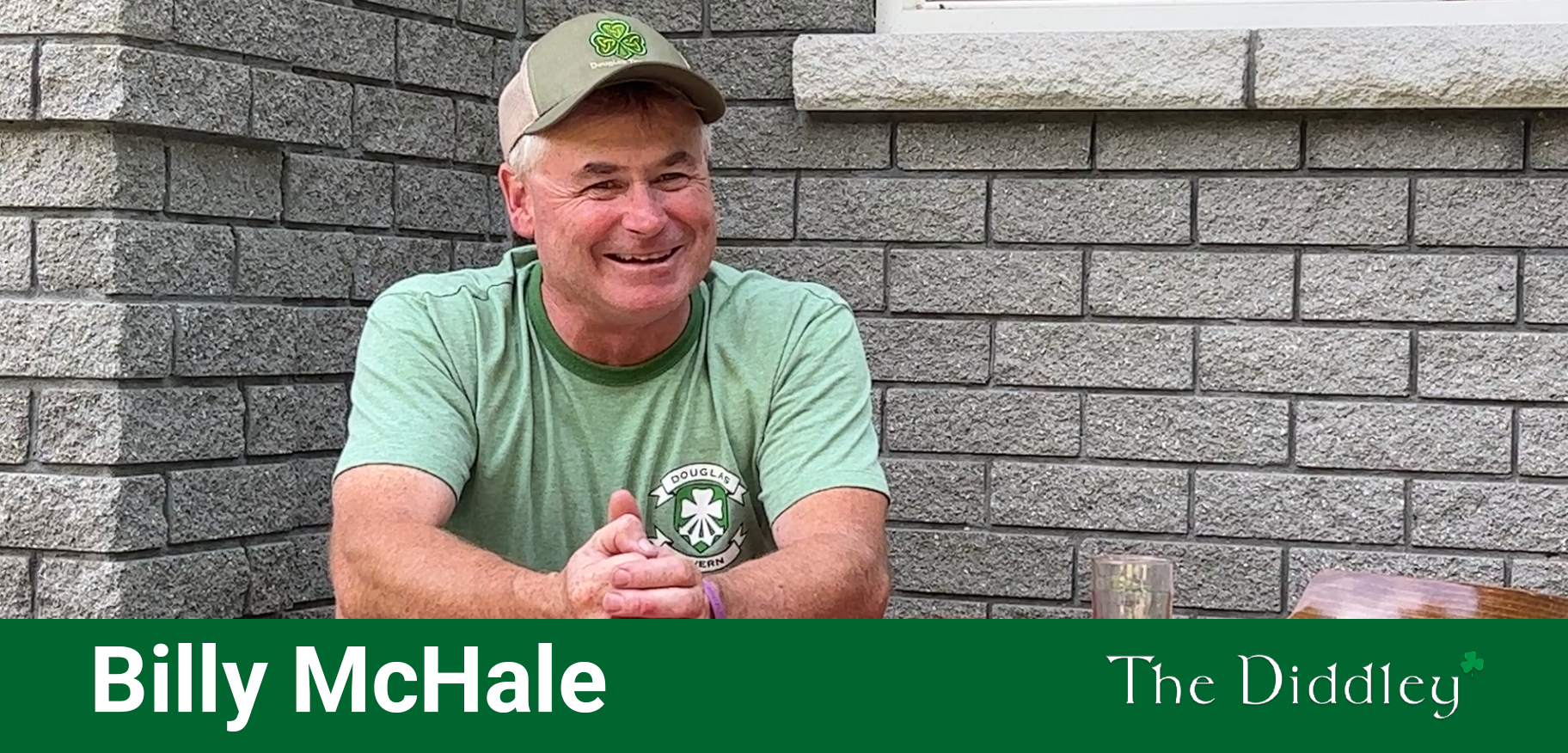
Billy McHale: The Son of the Diddley
Some people grow up beside something. Billy McHale grew up inside it.
“Well, my name is Bill McHale, aka William, named after my mother’s dad, who was Billy O’Grady from Cormac.” Born in August 1970, just as his family moved into the Douglas Hotel, Billy was the youngest member of the household. From the very first breath, his world was shaped by the building, the people, and the rhythm of the place they would come to call The Diddley.
“I spent my entire life living under that roof.”
It wasn’t a figure of speech. The McHale’s didn’t just work there. They didn’t just run it. They lived above it, within it, and around it, every day. “Since day one, that’s what I remember was being there,” Billy said. “It was second nature. It’s what we did.”
That blend of home and business meant that from the earliest age, he was absorbing everything—not just the music and laughter, but the labour behind the scenes, the weight of the days after a busy night, the subtle rules of shared space between family and community. As other kids grew up learning how to ride bikes or skate, Billy was learning how to clean ashtrays and carry beer cases.
“We got to start cleaning up and helping around and doing our bit to keep things going so they didn’t have to hire somebody else to come in and do it.”
It was never framed as a burden. It was framed as belonging. To clean the bar was to carry forward something that mattered—not just to the family, but to Douglas itself. There was no glamour in picking up after the night’s card games or scrubbing ash from the tables, but there was pride in it. The bar was open until 1 a.m., but “it was nothing for the bar to close and the card games to start,” Billy remembered. “Mom and Dad got to stay in bed that extra hour and a half or two hours if we could be down there cleaning up.”
The walls of the tavern held their stories, but for Billy, the walls themselves were part of the story. He wasn’t just raised in Douglas—he was raised in its very heart, above the clink of glasses, the tap of a cue ball, and the echo of voices that would become the soundtrack of his life.
Weekend Escapes to Grandma’s: Childhood During the Chaos
Some families go to the cottage on weekends. The McHale kids went to Cormac.
“It was alright, we went and got to spend time with our grandmother, which was great times for us,” Billy said. That might sound like a calm retreat—and in many ways, it was. But the reason
behind it wasn’t a quiet one. “We weren’t banished from the place on the weekends. It was just better. Safer.”
The tavern, especially in the late ’70s and early ’80s, wasn’t just lively on Saturday nights. “It wasn’t just the weekends, and it wasn’t just St. Patrick’s,” Billy remembered. “Every night of the week at the hotel was busy, and come weekends, it went threefold.”
So when Friday hit, the kids were packed up. “Friday evening, we got off the bus, we were gone for the weekend.” The hotel would roar to life, and the youngest McHales would be far from it, up the road with their grandmother. In hindsight, it reads like smart parenting. At the time, it was just routine. “It was great,” Billy said. “And then, as we grew up and evolved… we moved into doing those jobs.”
But before the chores, before the cleaning and the coke cases and the ashtrays, there was that simpler time—the quiet weekends, the bus ride to Grandma’s, the unspoken understanding that the tavern had a life of its own when the lights went down and the card tables came out. “Although the bars were only open till one then,” Billy said, “it was nothing for the bar to close and the card games to start.”
The weekend separation wasn’t about shielding the kids from something terrible. It was just practical. The place was packed. Adults needed space. There was work to be done and no time to mind children. So the McHale kids did what kids in Douglas did best: they went with it. “It was second nature. It’s what we did.”
That balance—of family, business, safety, and tradition—was always at play in the McHale household. The tavern might’ve been where the world came to gather, but the family always had their rhythm behind it. Friday meant the bus. Friday meant Grandma. Friday meant the start of another full house below the bar—and peace, for a little while, above it.
Cleaning Up After the Card Games
The tavern closed at one, but the night didn’t end then—not for the regulars, and not for the McHale’s.
“Although the bars were only open till one then, it was nothing for the bar to close and the card games to start,” Billy said. That was the cue. The workers’ shift was over. Now it was their turn. Drinks poured again, tables shifted, voices lowered to the soft intensity of late-night games. For the kids, it meant something else entirely.
“Mom and Dad got to stay in bed that extra hour and a half or two hours if we could be down there cleaning up and getting things ready as best we could.”
It wasn’t a chore—it was the next stage of growing up. As older cousins and tavern hands aged out or moved away, the work shifted naturally to Billy and his sisters. Cleaning the bar wasn’t
glamorous. But it was theirs. And they took it seriously. “Cleaning was the big thing,” he said. “Especially Saturdays and Sundays, because it was late nights.”
It started small. Garbage. Ashtrays. “The smoking was a big thing back then,” Billy remembered. “Just cleaning out the ashtrays and getting rid of the garbage was, you know, it’s one less task they had to do.” It was a way to help. A way to be trusted. A way to earn your place.
Then came the heavier lifting: the beer cases, the coke crates, the mop buckets. Nobody had to ask twice. The McHale kids knew that if they didn’t do it, someone else would have to be paid to. So they did it. Before school. After school. Weekends. Holidays. “As we grew up,” Billy said, “we moved into doing those jobs.”
There was never a punch clock. Never a speech about responsibility. It was just the way it worked when your home sat on top of the tavern. You cleaned because it needed to be done. You cleaned because someone else cleaned before you. And you cleaned because you were part of the place.
Even now, decades later, that rhythm hasn’t left Billy. The late nights, the card games, the ashtrays full of curled cigarette ends—they were the backdrop of childhood. Most kids remember Saturday morning cartoons. Billy remembers the sound of pool balls clicking below his feet, and the weight of a mop in his hands.
The Jukebox, the Video Games, and a Thousand Missing Quarters
Billy wasn’t trying to steal. He was just curious. And clever.
“I had a knack,” he said. “Not saying we were cheap, but we could get the video games and the jukebox open.”
It started as mischief. A quiet tavern in the early morning, the girls waiting for the school bus, and Billy playing pool. “I’d open up the video games and get them some credits on there,” he said. It was a little thrill—his own way of giving something back to his sisters before the day started.
Then it turned into something bigger.
“I remember them coming to get the quarters out of the jukebox and there’s a counter for how many songs was played on it as to how much money was in there. And there was $7 in the jukebox and there was a thousand songs played on it.”
It didn’t add up. And it didn’t take long to trace it back. “They had to sit us down and ask.”
Billy had figured it out. Not just how to open the machines, but how to manipulate them—how to pull records from the jukebox, how to make cassette tapes from those records, how to set things back just enough that maybe nobody would notice. But this time, they did.
“Didn’t they show up to do the money count while I had all the records out of the jukebox?”
It wasn’t about theft. Not really. It was about control. About exploration. About what a kid does when he’s born inside a place like that and starts to figure out how it works. And like everything else at the tavern, it was folded back into the rhythm of life. “Little things,” he said. “Yeah, we still had fun.”
The jukebox wasn’t sacred. The quarters weren’t inventory. They were just part of the tavern’s heartbeat. And Billy, growing up with the walls of that place as his second skin, couldn’t help but press a little closer to it. To crack it open. To see how it worked from the inside.
Not to break the rules—but to figure out who made them.
Bob Beach: Big Brother, Pool Teacher, and Bartender Legend
Before Billy knew how to break into a jukebox, he knew Bob Beach.
“Bob was there from as long as I can remember,” he said. “Bob was there and Bob taught me how to play pool.” There’s no exaggeration in Billy’s voice when he says it. Bob wasn’t just the bartender. He was more than an employee. More than a friend of the family. “Bob Beach was like a big brother to me.”
In a place like The Diddley, titles didn’t always cover what people meant to each other. Bob poured drinks, yes—but he also taught the kids how to shoot. How to wait their turn. How to move around the table like you belonged. “I’m not saying I was the best pool player,” Billy said, “but it’s when somebody who was really good at it taught you—you can’t help but be good.”
Pool wasn’t just a game at the Douglas Tavern. It was an education. A way of measuring yourself. A way of watching the room without being watched. And Bob was the one who made sure the kids learned it right.
He was also the one who answered the phone. “Nobody phoned at two o’clock looking for their husband,” Billy said. But still, the calls came. “Ninety-nine percent of the calls were wives looking for their husband on Thursday, Friday, or Saturday evening.”
Bob handled it with the same calm, dry wit he brought to everything. Billy remembered the sign he made—part joke, part public service announcement:
$1 I haven’t seen him.
$2 He just left.
$3 He’s on his way.
$4 He was never here.
It was funny because it was true. Guys would walk by and throw a couple of bucks in the tip jar—“I’m expecting a phone call.” Everyone knew what it meant. And Bob never missed a beat.
He was part of the furniture, but never just background. His name comes up like clockwork when people talk about the old days. Always behind the bar. Always steady. Always ready with a line, or a lesson, or a story. And for Billy, he was more than just a man who knew the game.
He was the first one who showed him how to hold the cue stick—and how to carry yourself like you belonged.
From Hotel to Tavern: When the Rooms Closed and Home Expanded
There was a shift in the early ’80s. Not just in the business, but in the building itself.
“In the early ’80s, ’82, ’83, it went from being a hotel to a tavern,” Billy said. “They didn’t rent rooms anymore.” It sounds like a small change—one word swapped for another. But in Douglas, it meant something bigger. It meant the end of one era, and the beginning of another.
The Douglas Hotel had always offered rooms upstairs. Travelers, workers, old-timers passing through—there was a bed if you needed it. That’s how it had been. But over time, things changed. The clientele shifted. The needs of the community shifted. And so did the McHale family’s life within the walls.
“That’s when we were allowed to move over into the other side and expand our family home.”
They weren’t just closing off rooms—they were reclaiming space. The business was still downstairs. The beer was still flowing. The music still played. But the upstairs began to breathe in a different way. The lines between business and home, already thin, grew even more blurred.
And with the rooms closed to guests, a chapter quietly ended. Gone were the long-term stays. Gone were the characters who lived upstairs for weeks at a time. Gone, too, were some of the wild stories—the ones Billy didn’t fully understand until years later. Stories told in quiet voices, or only when someone like Harry Searson came back and asked to see the old “hurricane deck” once more.
But what the family lost in rooms, they gained in roots.
That expansion turned the building into more of a true home. The kitchen grew. The living quarters stretched into the old guest rooms. The tavern below remained public, but the floors above grew more private. More lived-in. More theirs.
Even now, Billy talks about it without nostalgia or sadness. Just facts. “We weren’t there for a lot of that,” he said. But he remembers the feel of it. The moment when the balance tipped—when The Douglas Hotel stopped being a place for visitors to stay, and fully became The Douglas Tavern. A place where everyone gathered, but only one family truly lived above it all.
Family Roles: Who Poured, Who Served, Who Watched the Door
At The Diddley, the floor had a rhythm. Not just the music or the crowd—but the people who ran it. Everyone knew their role, and no one needed to be told twice.
“My mom’s family from Cormac, they’re a more shy, reserved group, where the McHale’s are a little more socially outgoing,” Billy said. That difference shaped how the bar worked. “So my mom’s family worked behind the bar and my dad’s family would work the floor.”
It wasn’t planned. It just fit. The quieter ones poured the drinks. The louder ones carried them. And somehow, it all ran smooth. “It was a finely tuned instrument when you seen how everybody worked,” Billy said. “They had their own pit to work at and everybody had their share of the floor to cover.”
No confusion. No overlap. Just a living map of who handled what, built over years of repetition and trust. “Everybody knew everybody, you know,” Billy said. “And if somebody new came in…”
Well, that’s when his mother’s radar kicked in.
“God bless her, in the business for 50 years, she’d still say, ‘Who is that person?’ Instead of going over and out—they’re in your house, you’re allowed to go ask. And I’d go straight over to the table and I’d ask who they are and shake their hand and come back, ‘Mom, that’s so-and-so.’ ‘Oh, I thought that’s who it was.’”
That’s how the place worked. It wasn’t just a bar. It was a family operation, and not in the symbolic sense. Everyone who served, who collected at the door, who ran the sound or stacked the chairs at the end of the night—most were blood. And the ones who weren’t might as well have been.
They didn’t have bouncers. “We had doormen to keep track of how many were in the building,” Billy said. That was it. No fists. No shouting. Just someone with a headcount and a watchful eye. And often, that someone was a buddy. A cousin. A friend from the fire department pulling a shift to keep things moving.
That’s how you ran The Diddley. You didn’t hire strangers. You worked with the people you trusted, and you trusted the people who showed up year after year—not because they were paid to, but because they were part of it.
No Bouncers, Just Firemen: Crowd Control the Douglas Way
Security at The Douglas Tavern never wore black shirts or earpieces. They wore turnout gear on weekdays and T-shirts on weekends.
“We never had bouncers,” Billy said plainly. “That’s the one thing we never had.”
What they did have was trust. Trust in the people who ran the place, and trust in the people who kept it safe. “We had doormen,” he said. “To keep track of how many were in the building. To take money at the door. That’s all we wanted to do—cover the bands.”
For the first 30 years, they didn’t even charge a cover. The music was part of the place, not a separate ticketed event. But times changed, and so did costs. “Then the price of the bands started to go up, and they had to,” Billy said. “They’re traveling, they’re giving up their jobs… they’re trying to make a little bit of a living on the side.”
So they started charging. Not to make a profit—just to break even. And they needed someone to collect the money. “Unfortunately, it ended up being most of the guys in the fire department,” Billy said with a laugh.
It wasn’t a knock. It was a fact. The people who could be relied on to show up, stay sober, and know everyone by name? That was the fire crew. His friends. His cousins. His community.
But there was one night it didn’t go to plan.
“One night we had a fire call,” he said. “Not all hell broke loose, but it didn’t go well.”
The doormen disappeared—to fight a fire. You can’t schedule emergencies, and in Douglas, you couldn’t separate the volunteers from the crowd. They were the crowd.
Still, it worked. For decades, it worked. And that wasn’t luck. That was the kind of place it was. “Without family, there’s no way—no way this could have happened,” Billy said. Even in the busiest moments—when the music was blaring, the crowd was thick, and the floor was packed shoulder to shoulder—someone at the door knew who was inside, who was too young, and who didn’t belong.
They didn’t need a bouncer. They had brothers.
The Parade, The Pajama Party, and the Day After St. Patrick’s
If St. Patrick’s Day in Douglas was the storm, March 18th was the calm—but not really.
“The parade was a great idea,” Billy said. “But my god, it made more work.” Work that didn’t stop with the last float. Because the moment the crowds thinned and the bands loaded out, cleanup began—and it was usually done by the same people who’d worked the whole week leading up to it.
“My uncle Bob and I… we’d clean, we’d move the tables, we’d sweep the floor, we’d get everything scrubbed.” He says it like it’s normal. Because in Douglas, it was.
And while the 17th belonged to everyone, the 18th was theirs.
“The girls were doing the big job, but it was also the labour-intensive job,” Billy said. “There were a million other little jobs to do.” Tables and chairs went back up. Floors were scrubbed. Garbage was hauled. And by mid-morning, everything had to be ready again. Because technically, the bar was still open.
The staff—mostly family, mostly volunteers—didn’t party on the 17th. They worked. But the 18th? That was different. “By the 18th of March was our day,” Billy said. “It’s amazing, because nobody stayed up real late… everybody’d been up till 3 or 4 a.m. every night for the last five nights.”
So they didn’t drink hard. They didn’t dance long. They just sat, shared a few drinks, and breathed. “There’s no sleeping in,” Billy said. “Get up, get ready, have the place ready to go by 11.”
Still, they called it a party.
“I don’t know when the pajama party started,” Billy said, “that’s what the girls called it.” But it stuck. A quiet inside joke for the ones who held everything together. A name for the gathering that meant the work was done—at least for now.
And sure, everyone got sick. Not from hangovers. “It wasn’t hangover sick, it was just a little flu,” Billy said. “Because everybody was run down.” But that was the price you paid. That was the tradition. You pushed through. You stayed late. You cleaned up.
And on the 18th, for a few quiet hours, you raised a glass to what you’d just pulled off—together.
“My Christmas” — St. Patrick’s as Sacred Time
For Billy McHale, there’s no hesitation in the comparison.
“It was—it’s my Christmas. That’s how I’ve always put it. That was my Christmas because all family was around.”
In Douglas, St. Patrick’s wasn’t a one-day holiday. It was a season. A ritual. A marker of time that shaped the year. It was something you planned your life around—not because of leprechauns or green beer, but because of what it meant: everyone came home.
“Well, and again, every night there was something going on,” Billy said. “And because family was home, more people would stop in.” What began as a single day spiraled outward—first into a weekend, then a week, then sometimes longer. It wasn’t unusual for people to take vacation time just to be there. “They budgeted for it. They took their holidays that week,” Billy said. “And that was what they wanted to do with St. Patrick’s and Douglas.”
It wasn’t just locals. It wasn’t even just Renfrew County. People came from Windsor. Sudbury. Out east. Out west. Billy’s aunt from British Columbia never missed it. And as the years went on, the gathering grew bigger. Not because of advertising. Not because of promotion. Because people talked. And they brought friends. “When the kids from here started going away and bringing friends back, that made it get bigger and bigger.”
The Ottawa Farm Show always fell around the same time, adding to the surge. The parade took root. And then came the bands, the shirts, the parties, the after-parties. It was tradition stacked on top of tradition, until the entire village was humming.
But at the core of it, it wasn’t about the crowd. It was about closeness.
“Everybody’s allowed to retire,” Billy said, speaking about the eventual end of it all. “But imagine somebody taking your Christmas away.” It wasn’t said for effect. It wasn’t sentimental. It was just true.
St. Patrick’s was the anchor point. The pulse of the year. The week when everyone was back, shoulder to shoulder, laughing, drinking, dancing, working.
And for the ones who lived it, who served the drinks and scrubbed the floors and stacked the chairs—this wasn’t a holiday.
It was home.
“You Knew Everybody’s Birthday” — Keeping Kids Honest
The thing about growing up in a small town—especially inside a tavern—is that nothing stays secret for long. And if your mother is behind the bar, forget about sneaking in.
“There was no sneaking into the hotel below age to drink,” Billy said. “She knew everybody’s birthday.”
Not just her own kids. Everybody’s. Your friends, your cousins, the neighbour’s kid three doors down—if they were part of the Douglas orbit, Terry and Evelyn McHale knew when they were born, who they were born to, and how long it would be until they were allowed to buy a beer.
It wasn’t about discipline or disappointment. It was about respect. And the kind of family where rules weren’t arbitrary—they were just part of keeping the whole thing from falling apart. Terry and Evelyn weren’t watching the door because they didn’t trust the kids. They were watching it because they knew them—and cared enough to keep them in line.
Billy laughs about it now, the way you do when you know you were caught fair and square. “Mother knew how old all of my chums were,” he said. That line says it all.
In Douglas, it wasn’t fake IDs or borrowed jackets. It was birthdays. And everyone knew yours.
You didn’t sneak past the McHale’s. You waited your turn. And when the day came, you walked through the door the right way—with your age in order, your name on the list, and your place in the tradition finally earned.
Riley and the Halloween Mask Incident
Some stories stick because they’re funny. Others stick because they’re familiar. This one does both.
It was hunting season—one of those long-anticipated times of year when the rules felt a little looser, the nights a little rowdier. Riley Prince wasn’t old enough to drink, but that didn’t stop the plan from forming.
“We snuck Riley Prince in,” Billy said. “A hundred percent we knew we were doing wrong.”
It wasn’t some grand scheme. Just one of those small-town ideas that feels solid enough after a few beers and enough peer agreement. The thinking was simple: it’s Halloween. Everyone wears a mask. Nobody will know who’s who.
Except this was Douglas. And Douglas was different.
“At that point of the night, we thought, oh, it’s all okay because everybody has a mask on. Nobody will know who it is.”
But it didn’t hold. “Riley boiled over that night,” Billy said. “He had to take the mask off.” And just like that, it was over.
“Everybody there found out who he was and we— I was in trouble for that.”
It wasn’t a scandal. It wasn’t the kind of trouble that breaks anything. But it was the kind that mattered in a place like this. Because the tavern wasn’t just a building—it was the McHale family’s reputation, their livelihood, their code. Letting someone in before their time wasn’t just a risk. It was a breach of trust.
And yet, it’s told with warmth. Like most of Billy’s stories, this one carries no resentment, no fear—just recognition. Of the boundaries that held. Of the lessons learned. Of the quiet systems that kept the place together, one face and one birthday at a time.
There’s no dramatic fallout. Just a mask that came off too soon, a cousin who thought he could slip through, and a mother who already knew.
Because at The Douglas Tavern, you didn’t just get carded. You got remembered.
The Shirt Auction: From After-Hours Idea to $14,000 Tradition
Some traditions are born from planning. Others come from a late-night conversation and a few leftover materials. The auctioned shirt at The Diddley was the second kind.
“One night, we’re sitting there drinking after hours,” Billy said, “and [Rick] said, we should make some T-shirts for the hotel. Great idea.”
Rick Barr ran RickArt Trophies. Billy was home from school. They had ink left over from printing shirts. So they made a sweatshirt. Just one. Someone had the idea—why not auction it off?
“We couldn’t believe how well received it was,” Billy said. “Well, now we’ve done it… we can’t take the money and put it in our pockets. Because that’s not us—so, we phoned the Renfrew hospital and said, hey, we have some money here for you.”
That was the beginning.
From there, it grew. “Year after year, we just made the shirts bigger. We made them better. We made them more one of a kind.” Tracksuits. Jackets. Jerseys. One year, a full Douglas Tavern tracksuit ended up in Ireland.
And the bids? They got serious.
Items that started as casual afterthoughts turned into high-stakes community artifacts. “Now they’re like—items were going for two to three thousand dollars, four or five thousand dollars…” Billy said. “And all of a sudden, these checks were given to the hospice and CHEO and the Renfrew hospital.”
This wasn’t charity in the abstract. It was local. Personal. People came prepared to give. “We don’t let somebody that’s intoxicated to the point of not knowing what they’re doing bid,”
Billy said. “No, no, this was businesses. This was people that came there with the intention to
bid on the shirt.”
One year, Ottawa Valley Oxygen paid $7,000. Gerald Tracey matched it. “So it was $14,000 for one shirt.”
It’s not just about the money. It never was. It’s about pride. “Out of a little bar in Douglas,” Billy said, “we raised as much money as they could do in a week at a telethon.”
The shirt was never just a shirt. It was a symbol. Of what could happen when you mixed tradition with generosity, music with memory, and a crowd full of people who believed that even a sweatshirt could mean something.
And at The Diddley, it did.
Donors, Tracksuits, and a Hospital in Ireland
At some point, the shirts stopped being just shirts. They became icons.
“There were two full tracksuits,” Billy said. “And one of them tracksuits is actually in Ireland.” It sounds almost casual, but there’s weight in that detail. Something stitched in Douglas made it across the ocean—not because it was fashionable, but because it meant something.
The auctions had grown from a playful one-off into a community ritual. And with that came attention. Real money. Real commitment. Real change. “All of a sudden, these checks were given to the hospice and CHEO and the Renfrew hospital,” Billy said. “They’re bigger.”
The scale didn’t water it down. It deepened it. These weren’t silent auctions for corporate gain. They were loud, laughing, beer-filled moments of giving. “It’s an awful thing to say five thousand dollars doesn’t go far,” Billy said. “If we’d have kept it over 40 years and given them one check, it would have seemed like something, but they need that money now.”
So that’s what the community gave them. Now.
And the items? They evolved too. When Rick retired, Annie Craig, from Gadar Productions in Ottawa, stepped in. “Annie’s right from Douglas here. She married a guy from the Carp area. She came and we started getting our swag, our shirts, our hats… ordered through her.”
Part of the deal? She donated.
“She showed up with this hockey sweater and it was gorgeous,” Billy said. “And then they did ball shirts and more sweaters and, again, with more value comes more money.”
And still, the prices climbed. Not because of the material—but because of what it represented. “Every year after year after year, the prices of the stuff was going up and up and up.”
Then COVID hit. Everything stopped—except the auction. “We did it online. And we still had it. And it worked.”
The shirts weren’t just mementos. They weren’t souvenirs. They were stitched proof that tradition could evolve, that giving could grow, and that a little tavern in a little village could out-fundraise places 50 times its size.
The tracksuits, the sweaters, the shirts—they left the bar, but they carried it with them. Even to Ireland.
Gathering for Good: Douglas Fundraisers and $100 Phone Calls
Douglas was never just a place that threw parties. It was a place that showed up when it mattered.
“We had a very close friend. We lost her at the age of 14,” Billy said. There was no blueprint for what to do next. No fundraiser template. No online campaign.
“I said, we can’t go down to London, and we can’t do a fundraiser up here,” Billy recalled. “I made 100 phone calls and asked 100 people for $100.”
That was it.
“And you wouldn’t believe how much money we gathered up in two weeks.”
No raffle. No auction. No prize. Just a community asked to care—and a community that did.
“That will always be Douglas,” Billy said. “That’s the way Douglas sees each other.” It wasn’t limited to people from the village either. “Even if it’s a kid from Eganville or a kid from Renfrew… if we need to help, it’s not just the village. It goes out and out and out.”
This wasn’t unusual. It was the culture. It was what was expected—because it had always been that way. “If nobody tells you,” Billy said, “you don’t get a chance to put into it.” But once the word spread? “It always seems to go bigger around here.”
There’s no bragging in the way he says it. Just belief. And evidence.
Billy talked about the big families—how the names helped. “Drop a name and… well, actually, I do [know them], you know?” But it was never just about who you knew. It was about who you were willing to help.
And Douglas always helped.
It wasn’t about being Irish or Catholic or local. “There was Dombroski’s, there was Yakabuski’s,” Billy said. “The names and the different ethnic backgrounds that celebrated the 17th of March with us.”
Everybody was welcome. Everybody mattered.
And when someone needed help, there were no big speeches or committees. Just a hundred phone calls, a hundred promises, and a whole community that knew how to turn a tavern into a lifeline.
The Hurricane Deck and Hidden Histories
The third floor of The Douglas Tavern wasn’t just upstairs. It was a chapter barely anyone read—except for those who’d lived it.
“They called it the hurricane deck,” Billy said.
He didn’t go up there often. Few did. It was mostly closed off in later years, the rooms long emptied of their overnight guests. But once, just before St. Patrick’s Day, Billy brought someone up who had a reason to remember it.
“Harry Searson picked me to take him back up onto the hurricane deck,” Billy said. “And it was one of those…”
He paused, letting the weight of it hang.
Harry wasn’t just another patron. He was “an iconic businessman in this area,” someone who had spent time up there when the hotel still rented rooms. He wanted to go back—to see it one more time. So Billy took him.
“We went up the first flight of stairs, down the hall, and up the second flight of stairs,” Billy recalled. And Harry talked the whole way—quiet stories about people who used to stay there for weeks at a time. About things that happened behind those closed doors. Things Billy, even growing up in the building, had never known.
“Stories about the fellas that used to stay in some of these rooms that I had no idea about.”
Some of it had to do with the drinking. Some of it had to do with the struggles people carried behind the laughter. “That’s when alcoholism…” Billy said, trailing off. “Harry was very well renowned for helping people that had issues.”
And then there was the fire escape—the old tug-of-war rope, still hooked to the wall.
“They talk about the tug-of-war rope,” Billy said. “That was the fire escape back in the day. I don’t know if anybody ever tried one of the ropes to see if it actually reached the ground.”
Maybe it didn’t. Maybe it never had to. But it was there, like everything else in that building—worn, storied, and waiting to be remembered.
Music That Mattered: Fiddlers, Folk Songs, and Natalie MacMaster
Some people collect records. The McHale’s collected moments.
“The bands and the people that played in that place over the years…” Billy didn’t need to finish the sentence. The names spoke for themselves. And they weren’t just names. They were memories, carved into the walls of the tavern and stitched into its rhythm.
Julie Lynn was a favorite—his parents adored her. “Julie Lynn was the first woman inducted into the Renfrew County Country Music Hall of Fame,” Billy said. “She did something.”
And then there was Leahy. “When Leahy was just getting started,” Billy remembered, they came up from Lakefield and played Douglas like it was Nashville. That connection brought in more: Danelle Leahy married Natalie MacMaster. And Natalie? She didn’t just play the fiddle.
“She pounded on that stage that night.”
Billy remembered the sound of it. The way the floor shook. The intensity. “We thought she was going to put her foot through the stage,” he said. “All the Renfrew County fiddlers stand up to play the fiddle. Natalie MacMaster sat down and she hammered her foot.”
The passion wasn’t lost on the crowd. Not in Douglas. Not ever.
And it didn’t end with the professionals. “The kids… they were our stars. 100% they were our stars.” Billy lit up talking about them. Delaney Dick, with a voice that stopped the room. The Stokes girls, who danced and fiddled. April Verch. Jim Beattie, who brought Irish folklore straight from its roots and performed for 35 years in a row.
Then there was Hadrian’s Wall—Scottish in heritage but Irish in soul. “They changed Irish music in this area,” Billy said. “They played it like it was rock and roll.” And from them came a whole wave: Bang on the Ear, Fridge Full of Empties, and others who made the trek to Douglas just to say they’d played The Diddley.
It wasn’t a concert hall. It was better. It was personal. Small, hot, crowded. But the music lived in that space like nowhere else.
“They made the acoustics sound so good,” Billy said. And they did it not for fame, but for joy. They weren’t just making noise.
They were making history.
Room for Everyone: Irish, German, Polish — All Were Welcome
St. Patrick’s Day in Douglas wore green, sure—but the hearts inside the tavern came in every colour.
“The names,” Billy said, “and it’s not all Irish names either.” That wasn’t a footnote. That was the foundation. While the celebration might have had Irish roots, the community made sure no one stood outside the circle.
“There was Dombroski’s, there was Yakabuski’s,” Billy recalled. Ukrainian, Polish, German—backgrounds that didn’t match the holiday on paper but matched the spirit of it in every other way. “Everybody was allowed to be Irish for those three or four days.”
It wasn’t pretend. It wasn’t performance. It was permission—granted freely to anyone who showed up with a good heart and a willingness to join the crowd. “It’s the same with the other celebrations,” Billy said. “The Scottish have it. You go to the Highland Games. If they only let the Scottish in, there’s not gonna be many people there.”
That philosophy ruled Douglas. Nobody was checking lineage at the door. Nobody was keeping score. It was about participation, not pedigree.
“I love Oktoberfest,” Billy said with a laugh. “I’m not—like, there’s a bit of German in us, but I love Oktoberfest.”
At The Diddley, it didn’t matter what your name was. It mattered if you danced. If you raised a glass. If you knew when to hold the door and when to take your turn on the floor. The culture wasn’t preserved in silence—it was passed around in toasts, in stories, in music loud enough to shake the floorboards.
And it wasn’t just Renfrew County. People came from Quebec. From Windsor. From BC. And they weren’t treated like guests. They were handed a drink and a spot at the table.
It’s what made the Irish Parade more than just a parade. “They nominated us… for an award because they call it a multicultural event,” Billy said. “And it was. A hundred percent.”
That’s the thing about The Diddley. It never asked you to prove anything. Just to show up. And for a few days every March, everyone did.
The Returners: Kids Who Came Back to Help, Year After Year
Not every tradition is handed down. Some are picked up willingly.
As the original crew got older, it became clear that the work couldn’t be done the same way forever. “You know, there’s people that can’t do that 14-hour shift anymore,” Billy said. “And it’s not fair to expect it of them.”
But they didn’t have to ask.
“The kids all come right to the pump,” Billy said. “Kevin and Liam, Nick… every one of those guys. Rory Whalen being another one. And Breigh, like—they all came to the pump and said, ‘What can we do?’”
No phone calls. No begging. Just an understanding. They’d seen it all growing up. They knew what the 17th meant. And when the time came, they showed up, ready to pour drinks, stack chairs, run food, sweep floors—whatever was needed.
“You can’t do that in the city,” Billy said. “You can’t.”
These weren’t hired staff. They weren’t doing it for tips or clout. They were doing it because it mattered. Because it had always mattered.
“You know, again, I’m not kicking at other areas,” Billy said. “But it’s just the way it is here.”
The returners didn’t need to be told what the stakes were. They already knew. They’d been those kids under the barstools. They’d been the ones too young to stay for the night but old enough to know something special was happening. And now they were old enough to hold it up.
Rory and Bree didn’t just help. They became part of the machine that made it all go. Quiet, steady, reliable. They carried trays, ran errands, watched the floor like veterans. And when things got busy—and they always got busy—they never flinched.
That’s what legacy looks like in Douglas. Not a plaque. Not a medal. Just kids who knew the rhythm, knew the faces, and stepped up because no one else would do it quite right.
The generation that built the tavern was aging. But the next one?
They were already at the door—aprons on, sleeves rolled up, ready to serve.
Tending to the Town: The McHale’s and the Fire Department
The line between the tavern and the town was always thin. Nowhere was that clearer than at the fire hall.
“You know, your Dad was the Chief,” Billy said. “And now… well, as of two weeks ago, I’m officially the chief there now.”
It wasn’t pride in his voice so much as continuity. Because in Douglas, service wasn’t something you signed up for once. It was passed down. Father to son. Neighbor to neighbor. Tavern to fire hall.
“It’s total community,” Billy said.
Before 911, there were fire phones. Real phones. In real houses. Billy could name where they were. If you were on call for the weekend, that was it. You didn’t leave. “You had to spend the weekend basically in your house,” he explained. “Because you had to be within earshot of that phone.”
More often than not, it was his mother—Evelyn—who answered it. “Nine times out of ten, my mother was already at the radio doing that.”
The department was never flashy. “The fire department seemed so small and underfunded when I first started paying attention to it,” Billy said. But that changed. His dad, Terry, along with Chief Kevin van Woezik and others, made sure of it. “They got equipment there… we lack for nothing. We’ve got the best of gear. We’ve got the best of equipment. And we train.”
And it wasn’t just about gear. It was about bloodlines. “My son’s on there. His grandfather was on there. We’ve got so many father-son tandems on the fire department.”
That legacy is real—but it’s getting harder. “A lot of the young guys are moving out of the area to find work,” Billy said. And the new population—like the Mennonite families—have different ways of living. “They can’t join the fire department. Not our rules, their rules.”
Still, the spirit remains. It’s not just the fire hall. It’s the people. The ones who poured drinks at The Diddley, then put on a helmet and ran toward a burning barn the next night.
That was the McHale’s. That was Douglas.
When the alarm rang, you didn’t wait for someone else. You grabbed your boots—and you showed up.
Bank Closures and Barstools: How Losing a Bank Changed Everything
In Douglas, the tavern wasn’t the only gathering place—it just happened to be the last one standing.
“The bank closing… that was the big discussion every night in the tavern,” Billy said. “And it hurt our community.”
It wasn’t just about where to deposit a cheque. It was about what came after. The Friday routine was sacred: get off work, cash your pay, cross the street, and grab a beer. “Friday nights were spectacular there,” Billy remembered. “All the farmers would be coming in to cash their checks and all the work guys…”
They didn’t need to text each other. They just showed up. That rhythm was stitched into the week. When the bank left, the current broke.
“All of a sudden, people were going to Renfrew now. Or to Eganville.” The ripple effects were immediate. “Even at that point, there was no bank cards. There was no tap and pay. You couldn’t…”
Billy trailed off.
“No cell phones,” he added. The world was shifting toward digital convenience, but Douglas wasn’t built for that. The tavern still ran on cash. “From day one till the day it closed, there was cash across the bar and into the cash register.”
Eventually, they rented an ATM. It helped, but it wasn’t the same. “That certainly helped—100% it helped,” Billy said. “It alleviated the pressure at the bar…”
Before that, it was awkward. Ten people in line, one guy trying to write a check. It clogged everything. And it wasn’t just banking. The chip stand outside helped too. “We probably doubled our production of beer sales by not having these people at the bar trying to make sandwiches.”
Little things. Big impact.
But the bank? That was different. It wasn’t just a service—it was a signal. “Anytime you lose that main point of a community,” Billy said, “it’s… what’s next?”
People stopped dropping in. The guys from work didn’t gather like they used to. The room that once buzzed by six-thirty on a Friday night sometimes sat quiet.
That’s how a town changes—not in big crashes, but in slow, steady absences. One stool empty. Then another.
Until the rhythm breaks, and Friday night no longer knows where to go.
The Whiskey Shot at 10 a.m.: A Quiet Tradition
Before the music started. Before the doors opened. Before the tavern filled with green shirts and stomping feet—there was the shot.
“St. Patrick’s Day every year,” Billy said, “my Dad, Pat Howard and I have a shot of Irish whiskey… and that was before the bar opened at 10 o’clock in the morning.”
Just one.
It wasn’t for show. It wasn’t for the crowd. It was for them. A private pause before the day turned into a blur of voices, footsteps, glasses, trays, and fiddle reels. “We’d have our one shot and that was it,” Billy said.
And it mattered.
The year it all ended, they didn’t let it go. “Pat Howard showed up that morning,” Billy said. “We still went out to the farm where Mom and Dad had retired to and we had a drink.”
But it wasn’t the same. It wasn’t in the back room. It wasn’t surrounded by the smell of fryer grease and beer lines and mop water. It wasn’t five minutes before showtime with the sound of chairs scraping across floors.
“I think all three of us had a tear in our eye,” Billy said. “Knowing that… number one, that tradition is getting shorter-lived every year that we’re around. But number two, it wasn’t in the back room at the tavern.”
That small shot of whiskey had always marked the beginning. Of the biggest day. Of the loudest week. Of a rhythm that stretched back through decades.
Without it, the year felt off. Without the room, the shot felt unanchored.
But they took it anyway. Because tradition isn’t just about place. It’s about people who refuse to let go. Who show up, even when the party’s gone quiet. Who pour one out, not to get drunk, but to remember where they came from—and who they came with.
“We’ll do it as long as we can,” Billy said.
And that’s the kind of toast that doesn’t need a crowd. Just a glass.
And three friends who still show up at 10 a.m.
The Final 17th: COVID, Closure, and an Empty Barroom
When the world shut down, so did the music.
“There was nowhere to go,” Billy said. “And again, as I say, imagine somebody taking your Christmas away.”
In Douglas, the 17th of March wasn’t just a date. It was the centerpiece. The buildup. The heart of the year. And in 2020, for the first time in living memory, it didn’t happen.
“It was the worst,” Billy said. “Absolute worst day of my life in the morning on the 17th of March. And it’s never been like that before.”
At first, he resisted. “I was angry. I was—‘You’re making the wrong decision. We shouldn’t be doing this.’” That was around one in the afternoon. By three o’clock, something shifted. “I said, you know what? This is real.”
By five, he was sitting with his parents again. “I congratulated them on what they did. They made the right decision. They made not only a community-based decision, a health decision. And once again, they were leaders.”
The tavern closed before it had to. Before rules were handed down. Because they understood what it would mean to stay open. “To say we’re going to stay open, you’re putting the onus on [others] to make the decision.”
Instead, they made it for them.
The lights went out. The bar fell quiet. And still, the bills had to be paid.
“When they started to open it up again, okay, here we go. Now we can start to plan this retirement party.” But it didn’t last. “And then it closed down again.”
Eventually, they were allowed 50 people inside at a time. “That’s your band, your employees, and your patrons,” Billy said. They split the day into time slots. “These are your five hours. If you want to book it, book it.”
And people did. With patience. With gratitude. With respect.
“You bring your closest 40 friends and we’re going to show you a good time.”
There was no dancing. Not really. But there was music. There was laughter. There was something—something close to goodbye.
It wasn’t the retirement party they imagined.
But in its quiet way, it was exactly what The Diddley had always been.
Personal. Present. And full of people who knew how to make the best of the time they had.
The Missed Wake: A Farewell That Never Got Thrown
Some endings sneak up. Others get postponed until there’s no energy left to celebrate them. For The Douglas Tavern, the end came in silence.
“It’s not the way they should have went out,” Billy said. “We should have had a parody. And I mean a month of parodies to get everybody.”
That was the plan. A walking wake. A send-off worthy of five decades of pouring, dancing, hauling, laughing, and loving. “We were going to have everybody that ever played there, everybody that ever drank there be there within the month.”
But COVID came first.
“When we shut down,” Billy remembered, “you think about the worst days of your life. Looking back, it wasn’t all that bad. Really, it wasn’t.”
But in that moment? “I had to leave that day. I was angry.”
By evening, he understood. But the sting remained. Not just because the doors were closed—but because the farewell never happened.
“There’s a certain generation passing on now. The generation of us—we’re accepting it. And the generation behind us didn’t know it.”
And that’s the heartbreak. The missed moment. The chapter that ends on a blank page.
Yes, the community tried. There were 50-person gatherings, careful to the rules, respectful to the space. But it wasn’t the celebration. It wasn’t the walls straining with sound. It wasn’t the mob bouncing to the fiddles, or the beer flowing from noon until close.
“We wanted to have a wake,” Billy said again. “That was our plan.”
It’s hard to imagine the building without that final roar. Without that last laugh, last pint, last dance. But maybe the silence said something, too.
Maybe the fact that people still wanted to gather—even when they couldn’t—was its own kind of send-off.
“It doesn’t matter what you’re doing,” Billy said. “Whether you’re playing hockey for a living or doing videos like this… at some point, your career’s going to say, okay, it’s over.”
For the McHale’s, it ended without the party. Without the parade. But not without meaning.
Not without love.
And not without the story being told.
What Remains: Memory, Legacy, and the Weight of the Building
Even with the music gone, the building still stands. “It’s still there,” Billy said. “Still the same.”
But everything inside it feels quieter now. Still. Like a stage after the curtain closes. The floors still creak. The stairs still climb. But the heartbeat—the rhythm that once pulsed through its walls every March, every Friday night, every quiet afternoon between lunch and last call—that’s gone.
And yet, something remains.
“I do have people that I think are willing to try and do a pop-up one night,” Billy said. Not to restart it. Not to bring it back. But to honour it. “And if we do, it’ll be just to get everybody back in and thank them.”
The tavern doesn’t need a comeback. It already did what it was meant to do. It raised a town. Fed a family. Held up an entire community with nothing more than a bar, a band, and a hundred quiet hands doing the work behind the scenes.
That weight doesn’t go away. Even now, years after the doors closed, Billy still thinks about it.
“We weren’t banished from the place,” he said of his childhood weekends away. “It was just better. Safer.”
But he came back. Again and again. To clean. To pour. To build. And now, to remember.
“It’s over now,” he said. “But it was ours.”
The Douglas Tavern wasn’t perfect. It didn’t pretend to be. But it was real. It was loud when it needed to be, gentle when it mattered most, and full of people who showed up—not just for the party, but for each other.
That’s what legacy looks like. Not a monument.
But a room you can still see when you close your eyes.
And a voice that says: We bought it, and we were there a number of years. A lot of years.
Thank You, Mom and Dad
The tavern was the center of it all. But the center of the tavern—always—was Terry and Evelyn McHale.
“They gave us a great base,” Billy said. Not just a place to live, or a business to work in. Something deeper. A foundation. A way of seeing the world.
“We weren’t banished from the place,” he said. “We weren’t—you know what I mean?” There were rules, sure. Expectations. But never exclusion. “They were very good that way.”
It’s not flowery when he says it. It’s not emotional for the sake of performance. It’s something simpler. Truer. It’s the kind of thanks you carry quietly for years, until you finally find the words to say it out loud.
“They gave us a great base,” Billy repeats. “And then we were allowed to go do what we wanted.”
There’s something remarkable in that. The freedom to leave. The trust that you’d come back. And the wisdom to let that happen without force or guilt.
“And then we came back,” he said.
When they did, the lessons didn’t come in speeches. They came in action. Work. Long shifts. Late nights. Folding chairs. Stocking beer. Holding the bar steady when things were busy, and doing it all over again the next day.
“They taught us the work ethic,” Billy said.
And more than that, they handed down something that can’t be taught by example alone. “They gave us the passion for that place.”
That’s what stays with him now. Not just the years in the building—but the way his parents held it up, year after year. Not just for business. Not just for survival. But for the love of it. For the people. For the purpose it served.
The Douglas Tavern wasn’t just a McHale family business. It was Terry and Evelyn’s way of life.
And in the quiet moments, when Billy looks back—not as a worker, or an owner, or even a son—he knows what they gave him.
They gave him a home.